WOOD-FIRED OVEN | TYNKER
Maintenance, Installation and Lifespan – What Decides Whether an Oven Works for Decades?
Installation, cracks, winter protection and cleaning. A practical guide to keeping your oven in good condition for years without unnecessary worry.
Most questions are not actually about cooking. The questions we hear most often are:
- “Will it crack?”
- “Can it stay outside in winter?”
- “Does it need constant cleaning?”
- “How many years will it last?”
A mobile wood-fired oven is not porcelain. It is a substantial structure designed to work with stored heat.
Once you understand a few basic principles, it can become something that serves for generations.
Contents
- Installation – where mistakes matter
- Moving the oven – it is not a permanent structure
- Combustion and firewood – how they affect lifespan
- Ash and cleaning – this is not a grill
- Cracks – a natural phenomenon
- Winter resistance – what actually causes damage?
- Caring for the oven door
- The key principle and expected lifespan
- Mini FAQ
🏗 Installation – Where Mistakes Matter
Correct placement is fundamental. The oven should be positioned:
- 70–85 cm above the ground for comfortable and safe operation
- on a stable, load-bearing structure
- on a solid surface such as concrete, paving or a substantial terrace
Placing the oven directly on the ground is not recommended. Stability is one reason, but ergonomics matter too:
working with an oven at a very low height becomes uncomfortable during longer cooking sessions.
🚚 Moving the Oven – It Is Not a Permanent Structure
A mobile oven weighs approximately 140–190 kg.
That is substantial, but the oven can still be moved when it is handled carefully:
- 4 people
- 2 strong metal rods
- controlled lifting and stable support
Important rules: do not tip the oven over,
do not drag it on an edge, and never allow it to drop onto a corner.

🪵 Combustion Affects the Oven’s Lifespan
The lifespan of the oven also depends on what you burn in it.
Recommended firewood
- dry hardwood
- beech and oak
- fruit wood
Avoid
- ❌ wet wood
- ❌ painted or chemically treated wood
- ❌ excessive amounts of resinous softwood
Aggressive overheating shortens the oven’s lifespan.
Stable, controlled firing helps extend it.
🧹 Ash and Cleaning – This Is Not a Grill
There is no need for a complete clean-out after every cooking session. A small amount of ash:
- acts as natural insulation
- helps stabilise the ember bed
- is not the enemy
Recommended:
wait until the oven is completely cold, remove excess ash and leave only a thin layer.
Not recommended:
chemical cleaners, pressure washing or aggressive scraping with metal tools.
🧱 Cracks – A Natural Phenomenon
Heat makes materials expand and contract.
Fine hairline cracks are therefore a natural occurrence.
They are not automatically a structural defect or a safety risk.
Problems are more likely to occur when a cold oven is subjected to extreme heat too quickly.
This is why gradual heating is particularly important during the first firing and after long periods without use.
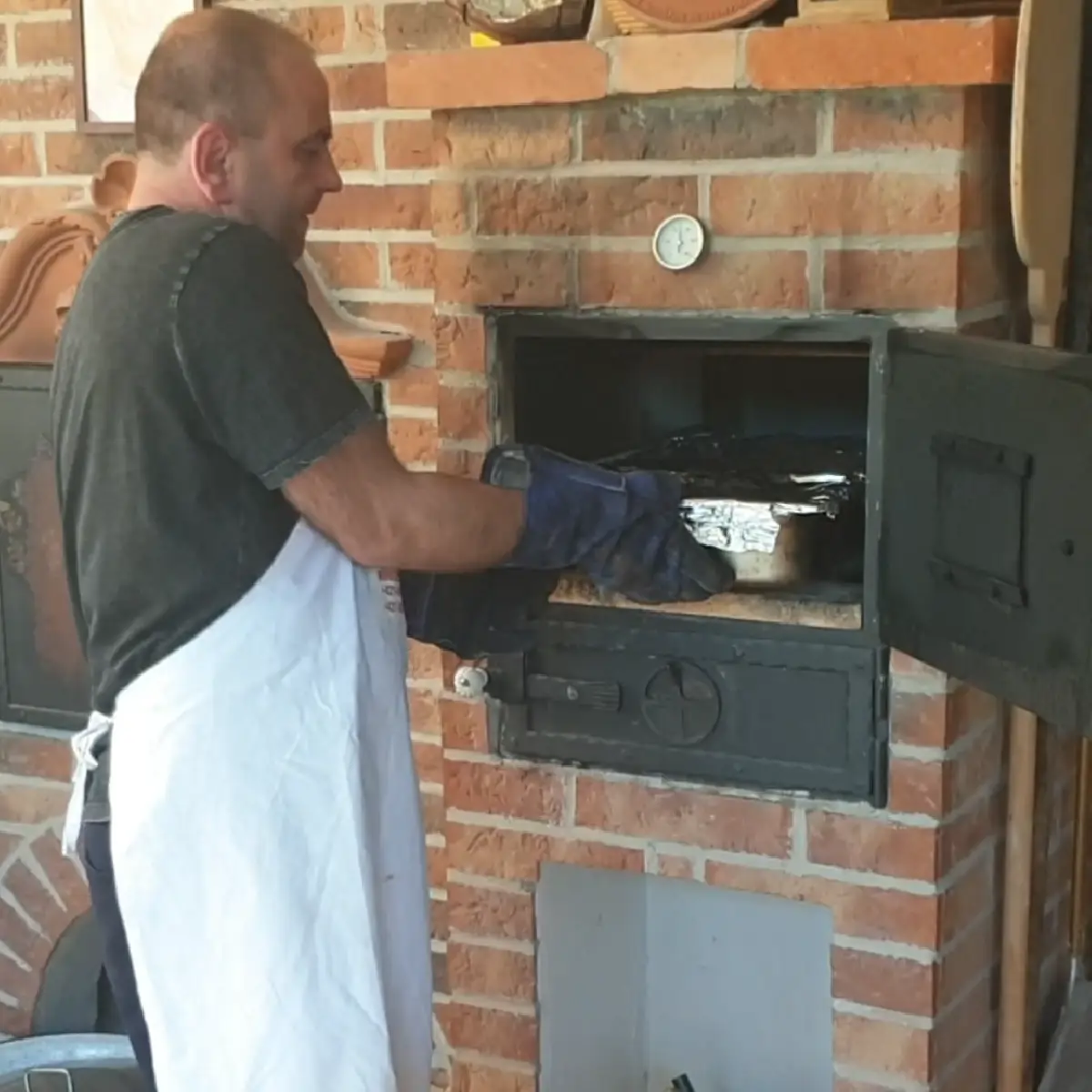
❄️ Winter Resistance – What Actually Causes Damage?
Frost itself is not the main problem. Moisture is.
- a covered location is ideal
- if the oven remains outdoors, a protective cover is recommended
- after a long period of wet weather, use a gentle drying fire before heating the oven fully
If the structure remains dry, winter conditions are far less of a concern.
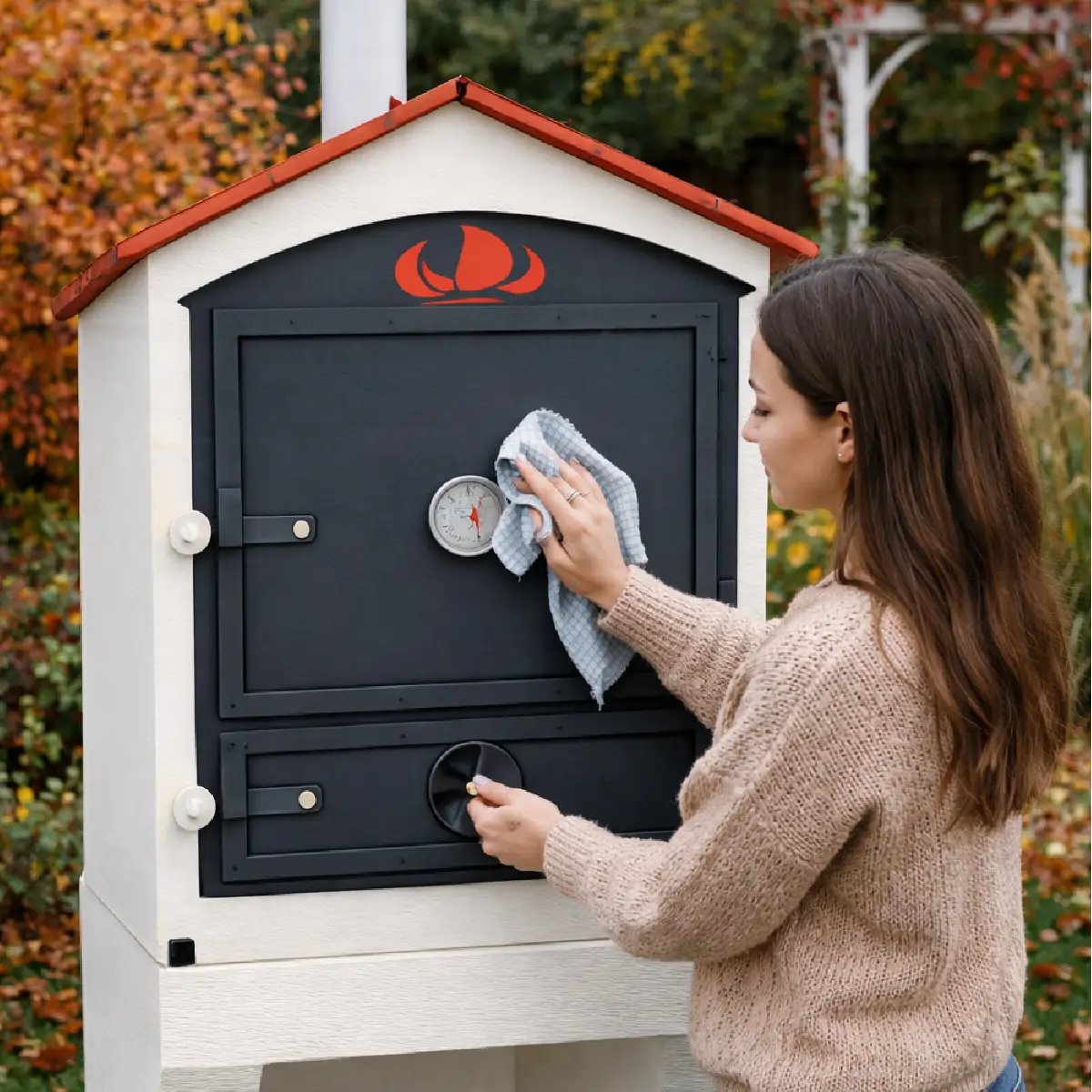
🧴 Caring for the Oven Door
After repeated use, metal parts may benefit from treatment with linseed oil.
It helps protect the surface, maintain its appearance and extend its service life.
It is not mandatory, but it is sensible preventive maintenance.
The Most Important Principle – How Long Can the Oven Last?
An oven does not wear out simply because it is used.
Problems are more likely when it:
- sits unused for long periods
- absorbs excessive moisture
- does not go through regular heating cycles
Regular use helps keep the structure stable.
Heat keeps the oven dry and ready for use.
If the oven is not aggressively overheated, is fired with dry wood,
stands on a stable base and is protected from excessive moisture,
it can provide many years of reliable service without major problems.
It is not merely a decoration. It is a working tool.
And it is not only about pizza.
Broths, slow-cooked dishes and bread all benefit from the different rhythm,
flavour and atmosphere of cooking with fire.
🔥 Looking for a Heat-Storage Wood-Fired Oven?
If you are looking for a mobile wood-fired oven designed as a genuine heat-storage system rather than a seasonal appliance,
pay attention to its construction, correct installation and the way it manages stored heat.
Mini FAQ
Do cracks mean that the oven is damaged?
No. Fine hairline cracks are a natural consequence of materials expanding and contracting with heat.
Rapid overheating without gradual warming is more likely to cause problems.
Do I need to remove all the ash after every use?
No. A small amount of ash acts as insulation and helps stabilise the ember bed.
Remove only the excess, and always wait until the oven is completely cold.
What is the biggest threat to the oven in winter?
Moisture. Frost itself is not the main issue.
Protect the oven from prolonged exposure to moisture and use a gentle drying fire after extended wet periods.
Can I use chemical cleaners or a pressure washer?
They are not recommended.
Chemicals may leave unwanted odours, while pressurised water can force moisture into areas where it should not be.
Most soot burns away naturally when the oven reaches the correct operating temperature.
Is it worth treating the oven door with linseed oil?
Yes. It is a simple form of preventive care for metal components.
It is not mandatory, but it helps protect the surface and maintain its appearance.