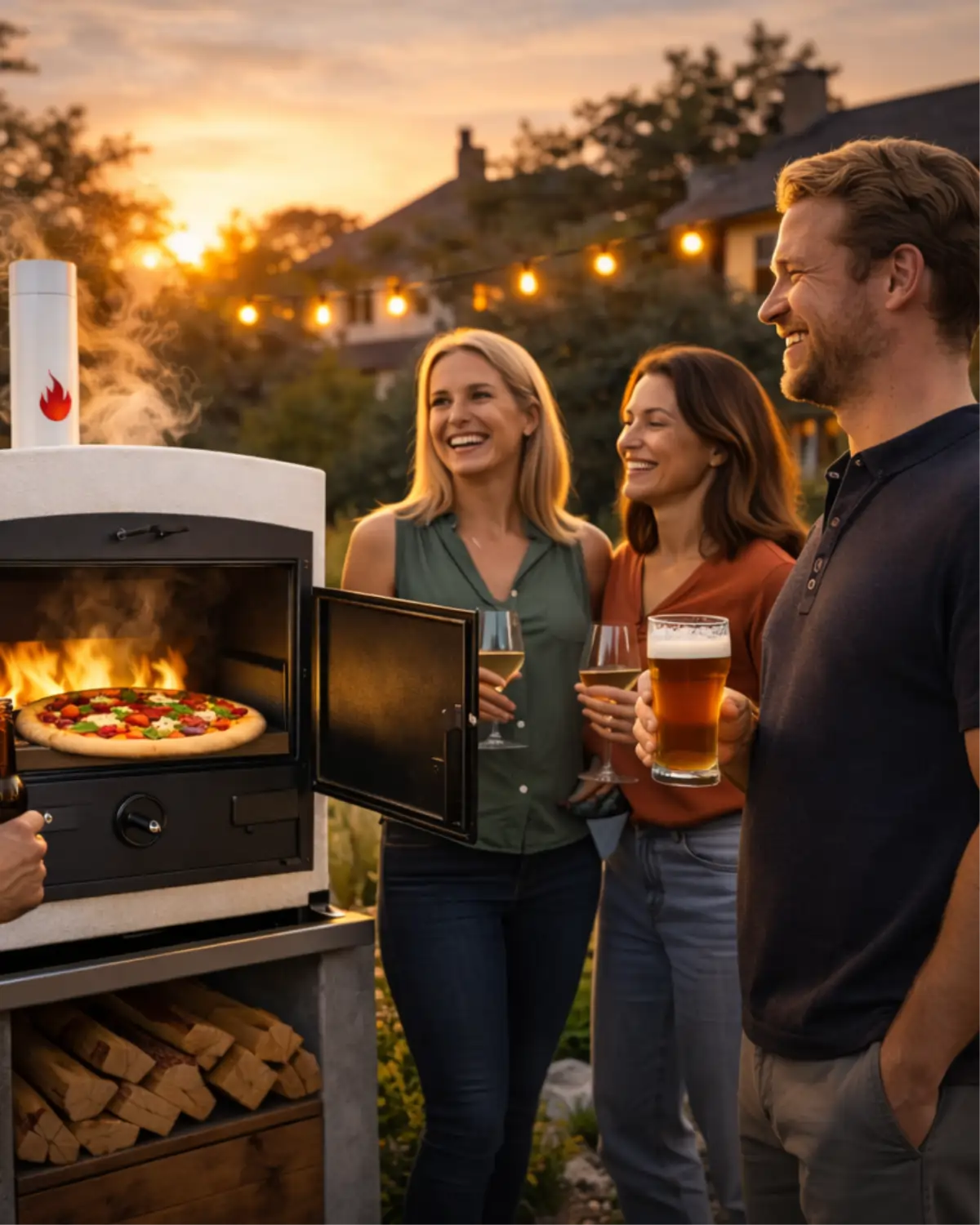
 Image description: different cookware and supports for a wood-fired oven, including firebrick, cast iron and racks for controlling bottom heat. Image title: Cookware for a Wood-Fired Oven and Bottom Heat Control. Image description detail: hero image for an article about cookware choices and the main ways to manage bottom heat in a wood-fired oven.
WOOD-FIRED OVEN | TYNKER
Cookware Choice and Bottom Heat Control – What Catalogues Usually Do Not Explain
Firebrick, racks, perforated pizza trays, cast iron and ceramic – when to use what so the bottom of the food does not burn.
If the temperature looks right but the bottom of the food still burns, the problem is often not the oven itself but the support or cookware. A mobile heat-storage oven produces strong radiant heat from below – this is not a flaw, but part of its character. The key is knowing when the food should be in direct contact with the firebrick, and when it should be separated from it.
For the foundation, these two pillar articles belong next to this one: what a heat-storage wood-fired oven is and pizza oven temperature and how to bake better pizza.
👉 How a Heat-Storage Wood-Fired Oven Works
👉 How to Fire Up a Wood-Fired Oven Properly
👉 Heat Zones in a Wood-Fired Oven
🧱 Firebrick – ideal when you want direct bottom heat
Firebrick is excellent when you need intense bottom heat – above all for pizza and thin doughs. For longer baking or juicier tray dishes, however, it can be too direct, and the underside of the food can take too much heat. So firebrick is not a universal solution – it is a targeted tool.
For the operating logic behind this, also read how a heat-storage wood-fired oven works. If you want the full range of cooking zones, continue here: heat zones in a wood-fired oven.
🍞 Bread – a perforated pizza tray as a simple but effective trick
A perforated pizza tray takes just enough out of the bottom heat to stop bread from burning underneath, while still leaving enough energy for a strong bake. It sounds like a small detail, but it makes a big difference.
👉 This also connects well here: Heat Zones in a Wood-Fired Oven. And for the firing rhythm, add this: how to fire up a wood-fired oven properly.
🔧 Rack – when you are not baking dough
With meat, vegetables, tray dishes and slower foods, one of the most important things is that the food should not receive the full direct radiant heat coming from the firebrick. In these cases, a rack, a tray or a suitable support creates a more balanced result.
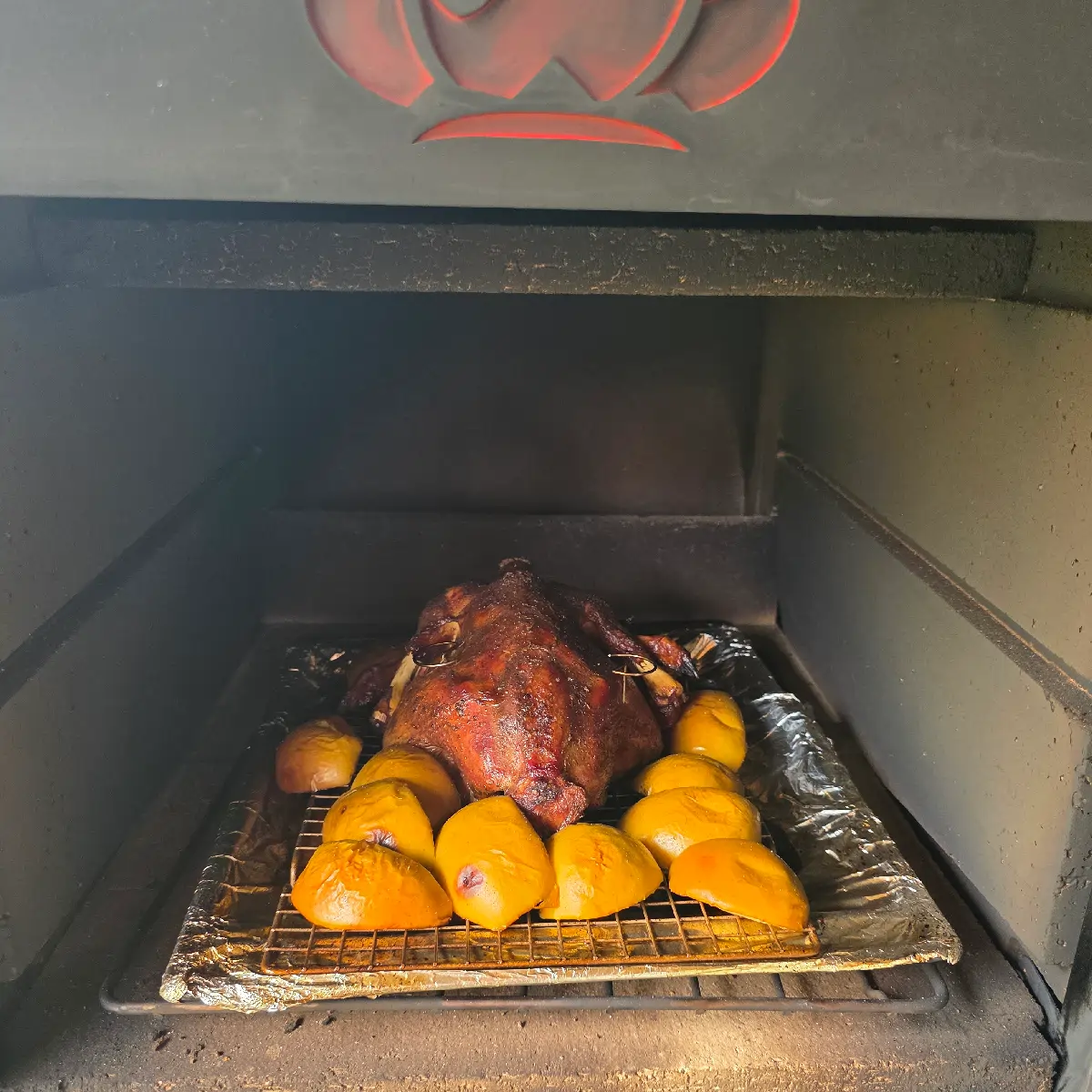
If you also want the grill and meat zones, read this too: heat zones in a wood-fired oven. And for longer-term use: wood-fired oven maintenance, cracks and winter care.
🧱 Flat clay slab or clay tile – an old solution that still works
A thick flat clay slab or tile can soften the peak of bottom heat surprisingly well. It evens out heat transfer, and very often that is exactly what saves the underside of the food from taking too much heat too fast.
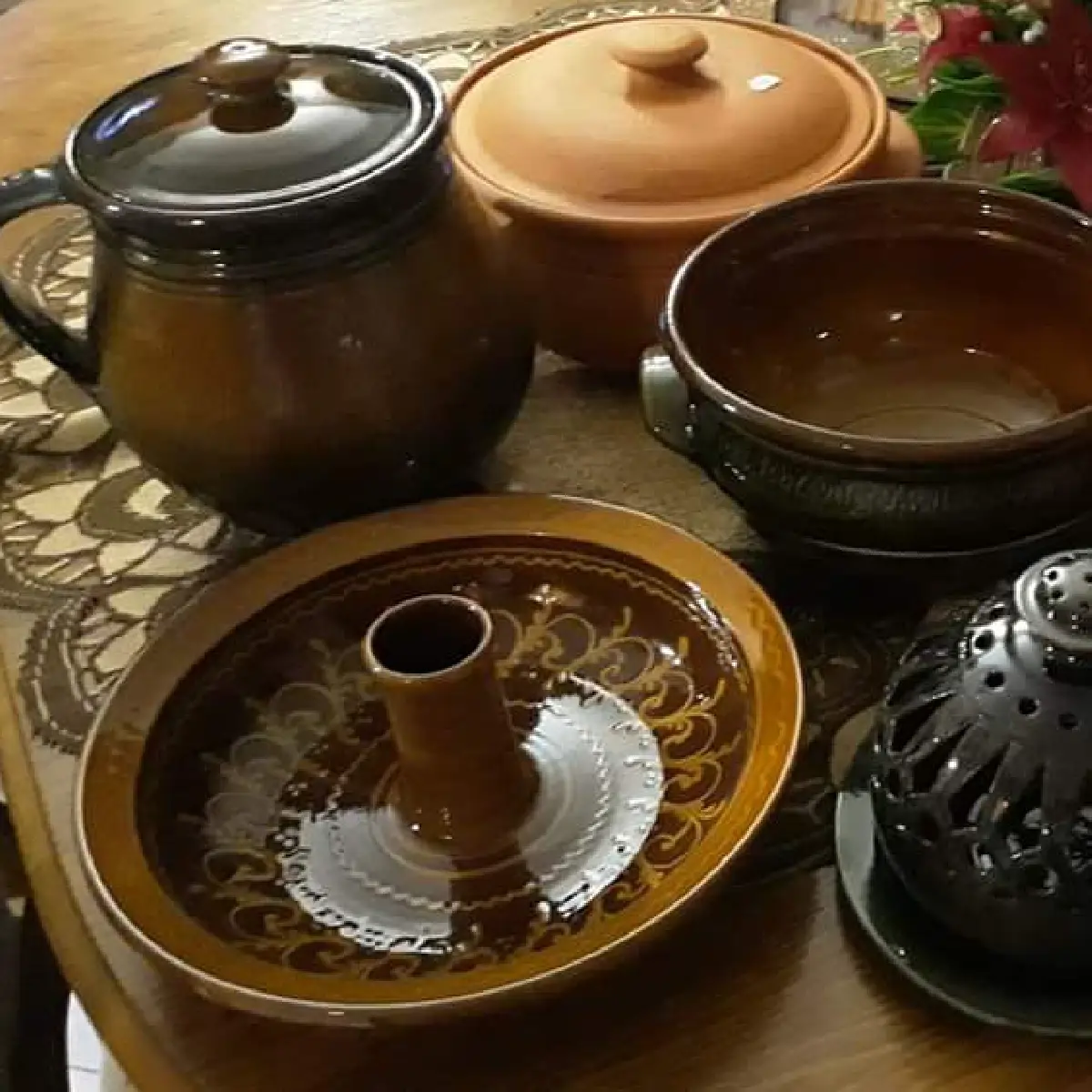
🏺 Ceramic cookware – when flavour matters too
Ceramic does not like sudden thermal shock, but in terms of flavour it can create an entirely different result. It is excellent for soups, beans, slower meat dishes and longer, calmer cooking processes.
For the heat-storage logic behind this, we also recommend: what a heat-storage wood-fired oven is.
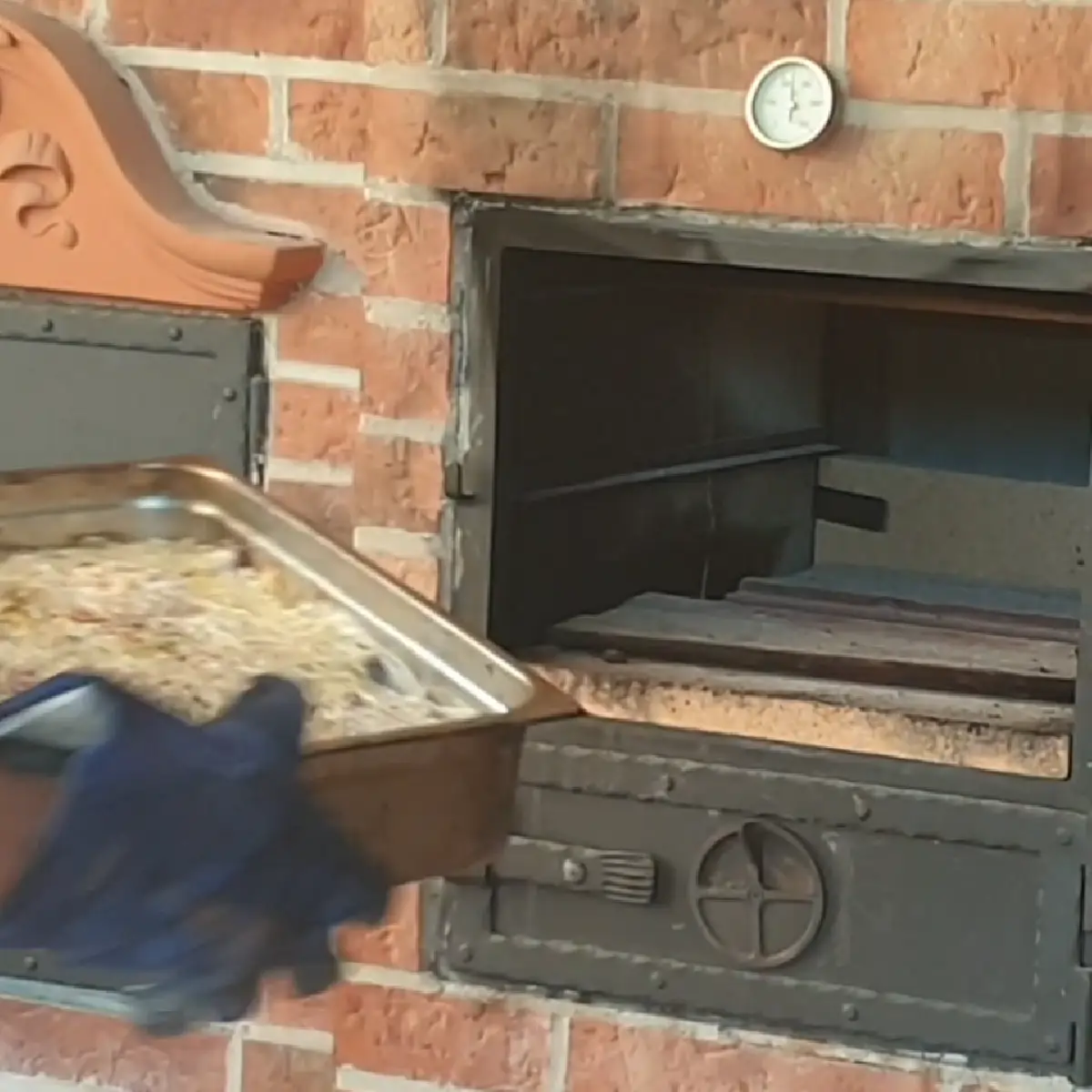
🥘 GN pans – practical and predictable
If you want more reliable control in the 160–200 °C range, GN pans are excellent options. They hold a useful volume, often work well with lids, and offer very strong value in exchange for stable results.
For this zone, it also makes sense to read: heat zones in a wood-fired oven.
🪨 Cast iron – stable, durable and forgiving
At lower and medium temperatures, cast iron is a very strong partner. It holds heat well, supports crust formation, is not delicate, and handles the smaller fluctuations of oven cooking very well.
If you also want the practical character of the oven itself, see: why not all mobile ovens are the same.
The most important principle
The difference is very simple:
- Direct contact with the firebrick = strong, direct bottom heat
- Separation by rack, tray or support = more balanced baking
The oven itself does not “burn” the food. You get the result created by your support choice and your cookware.
🔥 Practical accessories
If you want truly usable results, the oven alone is not enough. The cookware and supports you use with it matter just as much.
Mini FAQ
Why does the bottom of the food burn in the oven?
Most often because the tray or cookware is in overly direct contact with the firebrick, and there is no rack or other separating support between them.
What is the simplest trick for bread?
A perforated pizza tray can help a lot: it softens the peak of bottom heat while still leaving enough energy for a strong bake.
Can ceramic cookware go into the oven?
Yes, but sudden thermal shock should be avoided. If used properly, ceramic gives a very even and flavourful result.
🔥 Summary recommendation
If you are looking for a mobile wood-fired oven where pizza, bread, meat and slower dishes can all be handled well, then alongside cookware choice the heat-storage character of the oven itself is equally important.