Most people understand “wood-fired oven” as pizza and a big flame. A heat-storage oven, however, is really about something else: the heat is not created only for a moment, but absorbed into the structure, then released gradually and more predictably over time.
In practice, that means less rushing, less chasing numbers on a thermometer, and much calmer cooking. Once heat storage is working properly, the same system can handle pizza, bread, meat and slower BBQ-style dishes as the day moves forward.
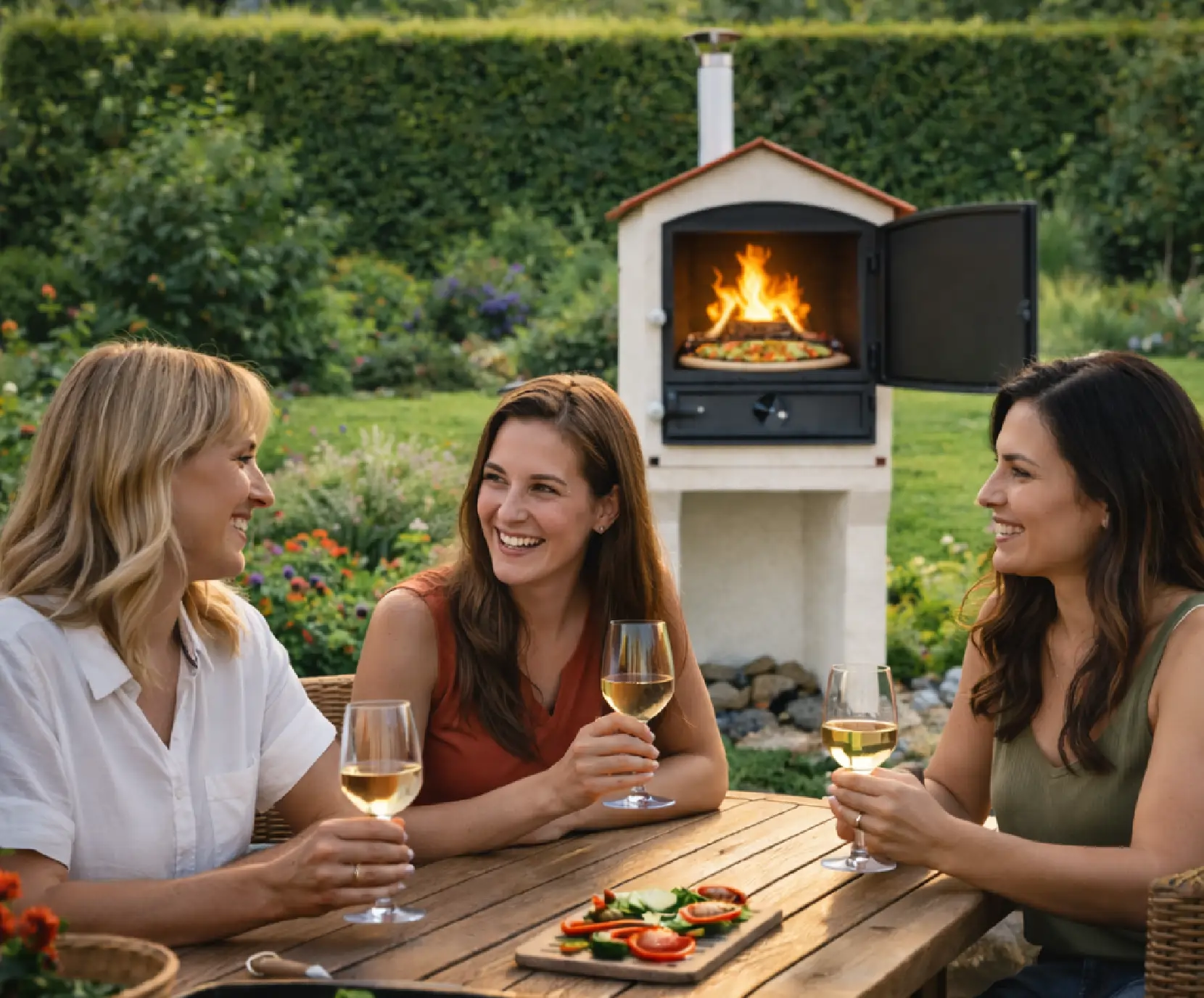
Image description: Tynker heat-storage wood-fired oven placed in a garden setting. Image title: Tynker Heat-Storage Wood-Fired Oven in the Garden. Image description detail: the hero image shows a Tynker heat-storage wood-fired oven in an outdoor garden environment for cooking and baking.
What is heat storage, and why does it matter?
Heat storage means that a material can absorb heat, store it, and then release it gradually. In a heat-storage oven, this means that not only the air inside the chamber becomes hot, but above all the mass of the structure itself warms through, and that is what stabilises the system.
That is why a heat-storage oven behaves differently from a lighter construction that heats up quickly, but cools down quickly too. Once the oven is properly heated through, you get a much larger stable time window for calm, controlled baking. And that is exactly what matters with bread, larger cuts of meat, or cooking for guests.
If you want to understand this behaviour in more detail, continue here: how a heat-storage wood-fired oven works. And for the practical side of firing: how to fire up a wood-fired oven properly.
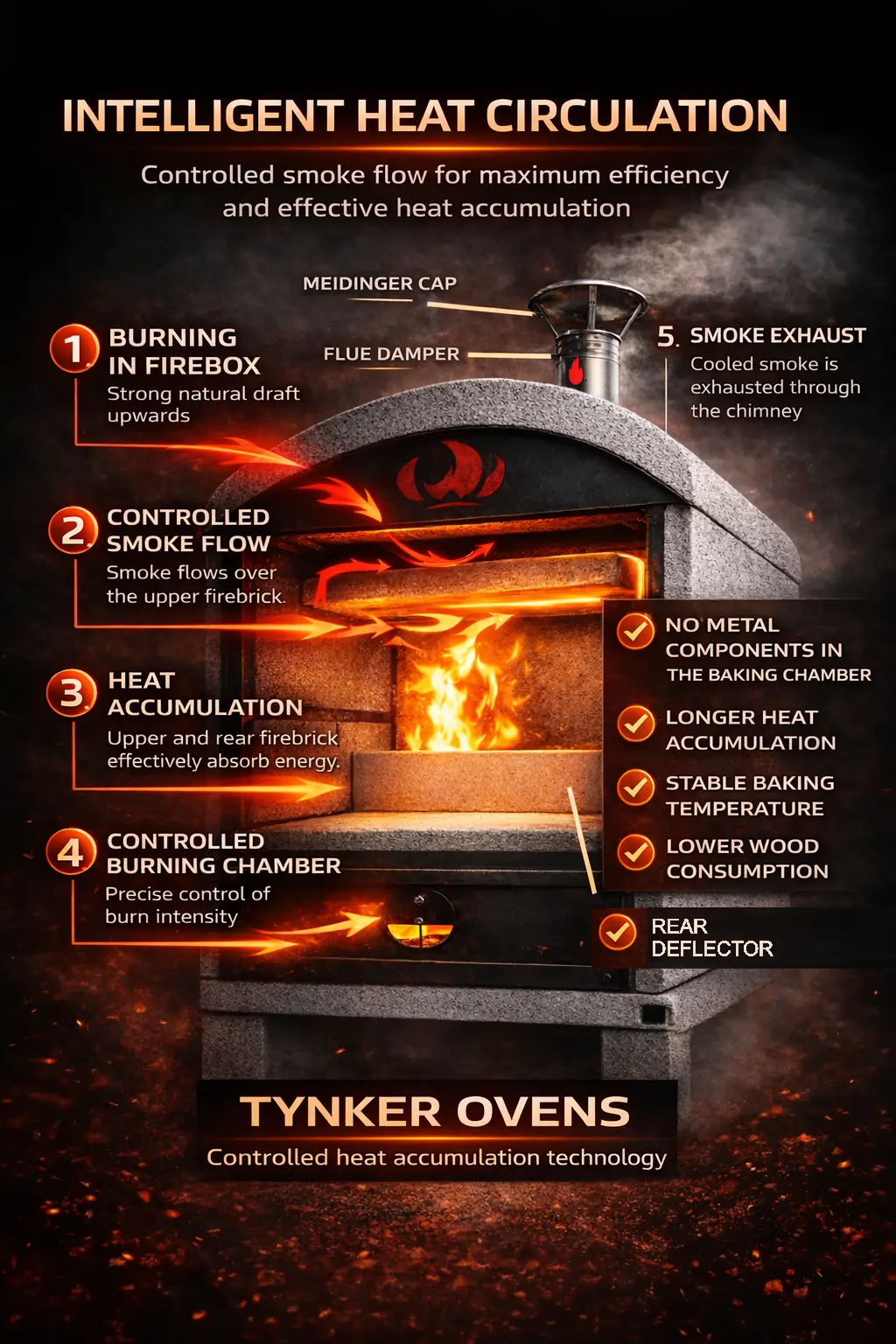
Image description: how a heat-storage wood-fired oven works, with heat stored not only in the air but in the structure itself. Image title: How a Heat-Storage Oven Works. Image description detail: the image shows that in a heat-storage oven, heat exists not only in the air but in the mass of the structure too.
What does stable temperature mean in practice?
Stable temperature does not mean that the display always shows the exact same number. It means that the heat behaves predictably: if you do the same thing, you get roughly the same result. That is the difference between nervous cooking and confident use.
Most problems start when someone tries to keep temperature high only with flame. Without a stable ember bed and a fully heated thermal mass, heat escapes, and the oven has to be “chased” again and again. But once the system is already working through heat storage, you can work in rhythm instead of reacting in panic.
The next logical articles from here are: how to fire up a wood-fired oven properly and heat zones in a wood-fired oven.
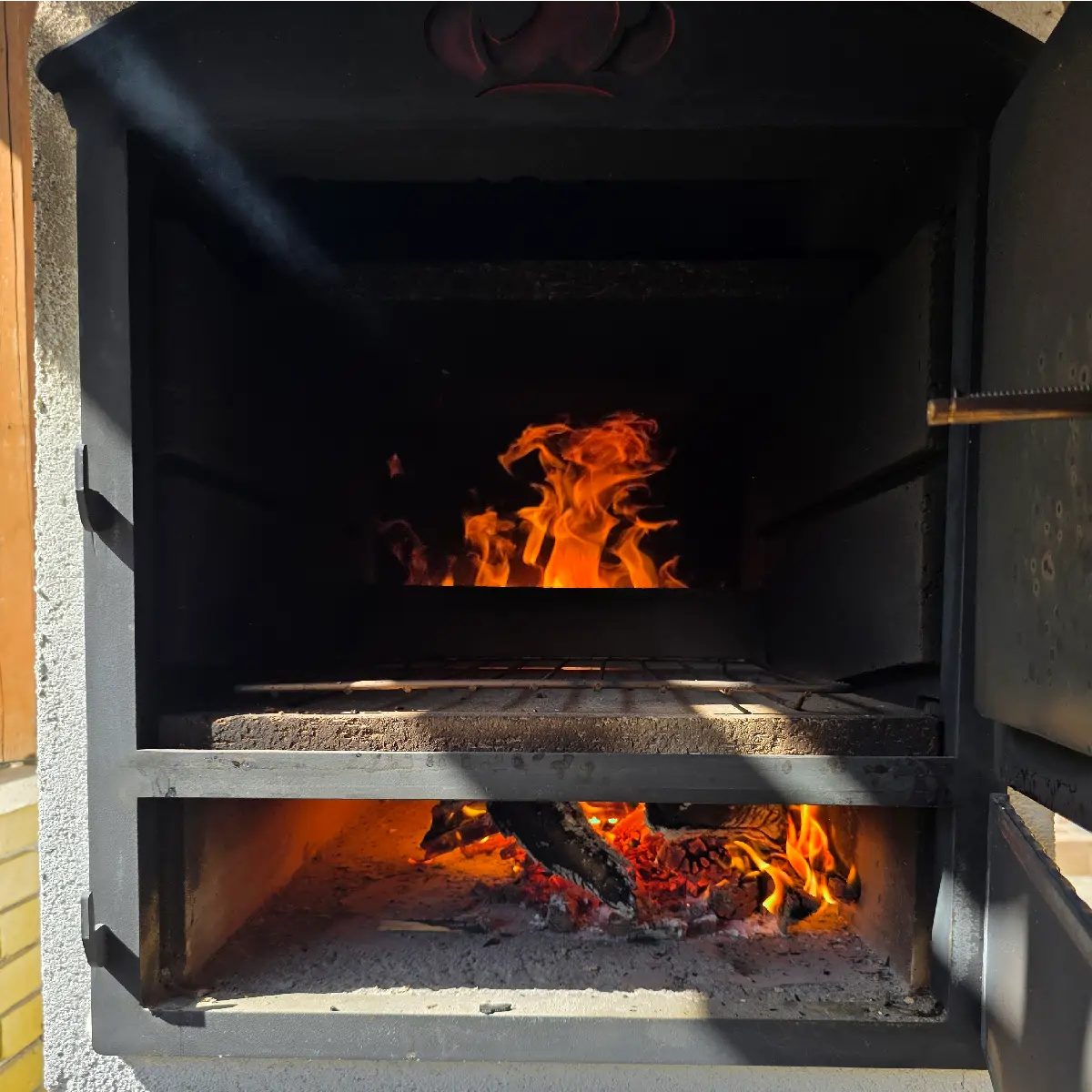
Image description: a living ember bed inside a Tynker oven creating stable baking heat. Image title: Living Ember Bed Inside a Tynker Oven. Image description detail: the image shows the role of a stable ember bed in the more even behaviour of a heat-storage oven.
Want to understand stable heat in detail?
The best next article for that is: How a Heat-Storage Wood-Fired Oven Works
Mobile oven vs masonry oven vs kamado
This is where people usually ask the wrong question. The point is not which one is “best”, but what each one is for. A masonry oven is beautiful, large-mass and highly traditional – but it needs time, space and fixed installation. A kamado is excellent for long, low-temperature cooking, but it works on a different principle from an oven. A mobile heat-storage oven becomes strong when you want multiple ways of cooking in one system.
If you bake less often and more event-style, a masonry oven can be wonderful. If your main focus is low-temperature BBQ, kamado or offset systems have their own strong world. But if you want pizza + bread + meat + residual heat in one setup, without a half-day heat-up, then a mobile heat-storage oven is a very strong answer.
You can find the detailed comparison here: kamado, masonry oven, offset BBQ or mobile oven. And if you want to move directly to the selection side: how to choose a wood-fired oven.
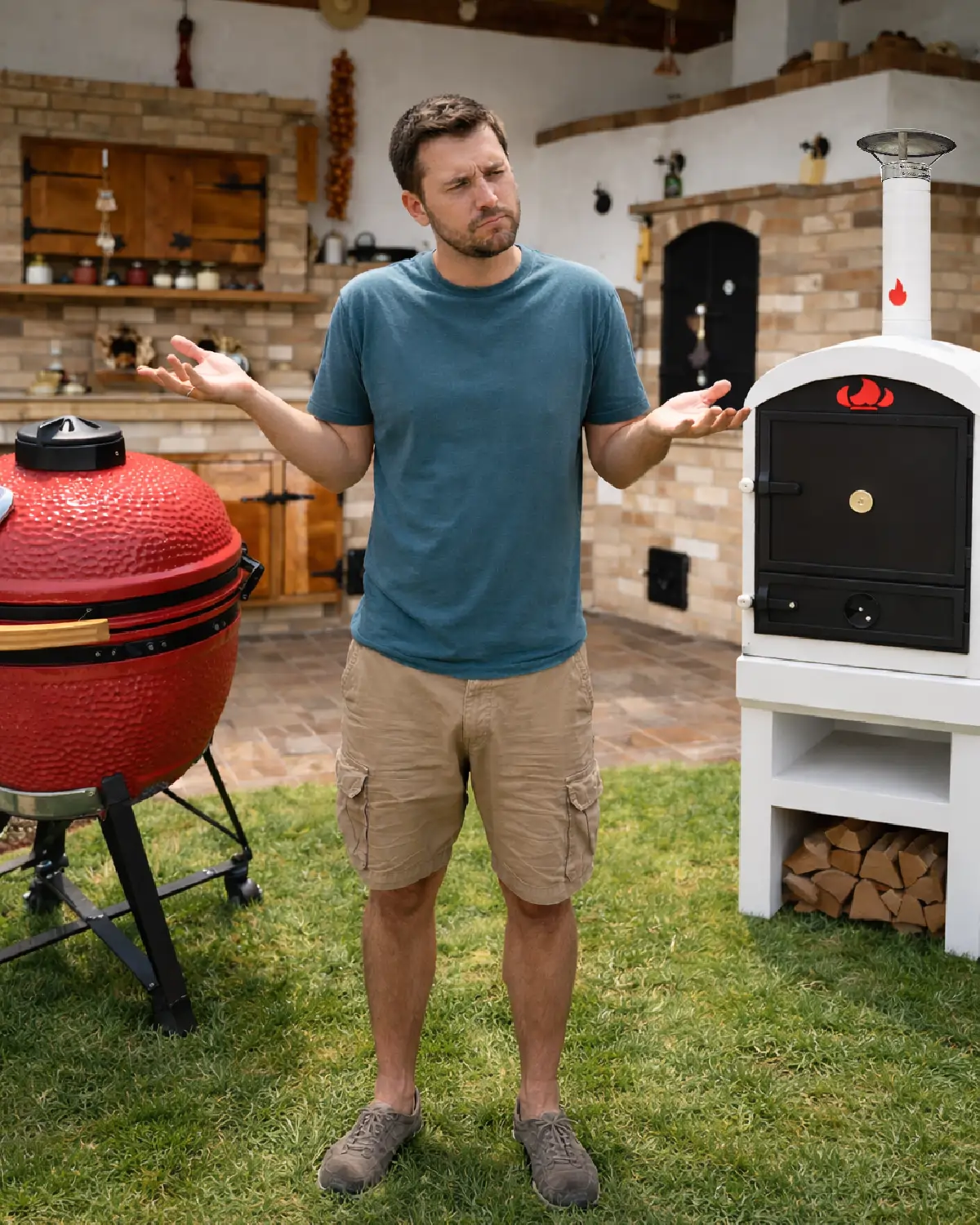
Image description: comparison of kamado, masonry oven and mobile oven systems. Image title: Kamado, Masonry Oven and Mobile Oven Comparison. Image description detail: the image compares different outdoor cooking systems based on use logic and operating principle.
Firing up – how does the oven “engine” come to life?
The biggest difference between “it sort of works” and “now I finally understand it” is in the firing process. In a heat-storage oven, you do not need aggressive, rushed flame. You need heat to build gradually inside the structure, and a stable ember bed to form.
Once that happens, the oven starts behaving more predictably: it responds better to smaller draft adjustments, holds heat better, and gives more even results. This is also where many people realise that a heat-storage oven is not just a “pizza machine”.
The exact process is explained here: how to fire up a wood-fired oven properly.
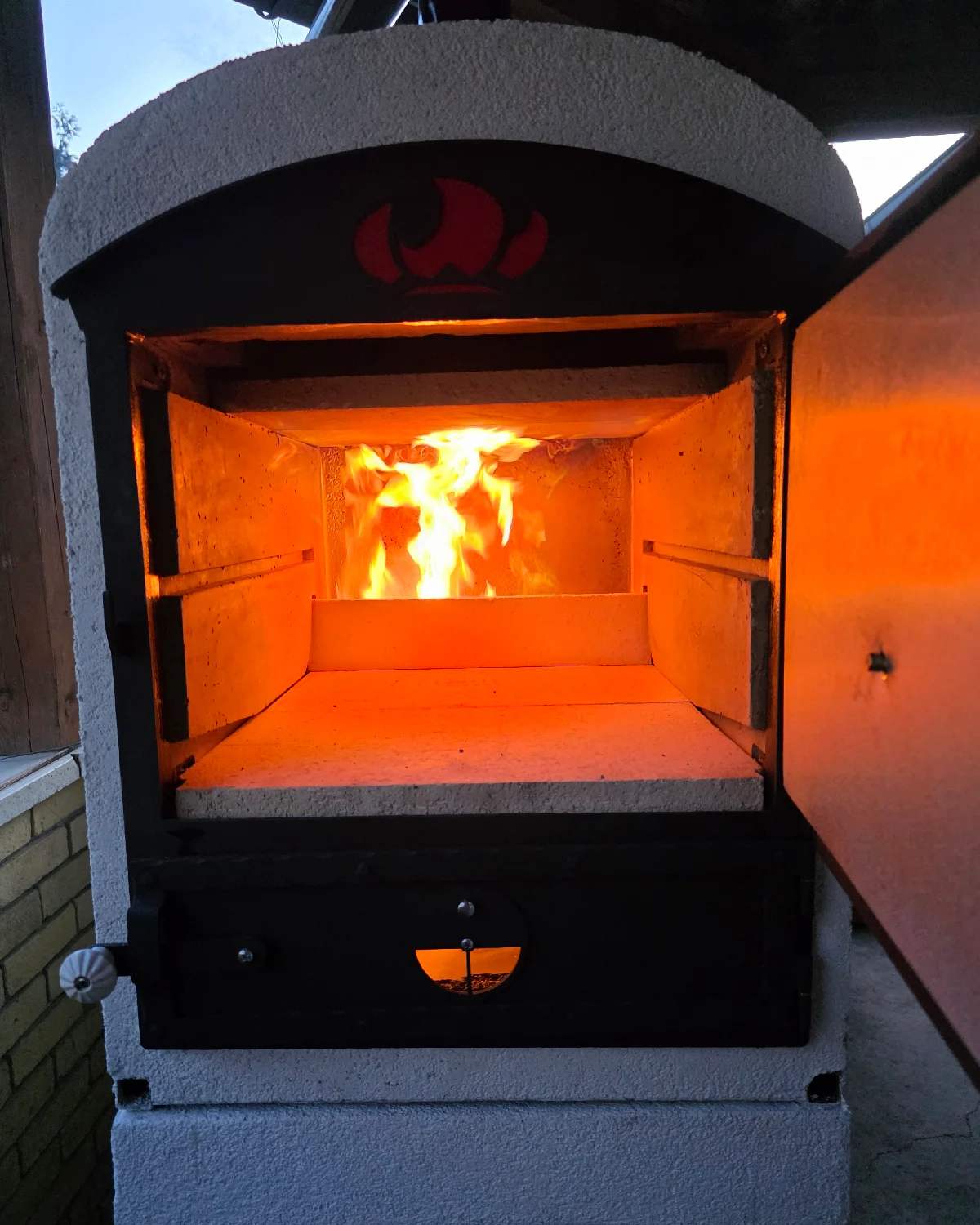
Image description: firing up a wood-fired oven by building a stable ember bed. Image title: How to Fire Up a Wood-Fired Oven Properly. Image description detail: the image shows the correct firing process, where the goal is a stable ember bed and a fully heated structure.
Firing step by step
If you want the exact process and the most common mistakes, continue here: How to Fire Up a Wood-Fired Oven Properly
What is a heat-storage oven best used for?
The greatest strength of a heat-storage oven is that it can support multiple cooking styles without forcing you to change tools. High heat is excellent for pizza, but stability is what you will value most with bread and meat.
- Pizza: once the mass is fully heated, baking becomes fast and repeatable.
- Bread: stable upper and lower heat are needed, and this is where the system really shows its strength.
- Meat and BBQ: with a well-built ember bed and rhythmic fire management, the whole process becomes calmer.
Many people also underestimate the role of cookware and accessories. But the right baking tray, rack, firebrick, pan or pot can make a very large difference in the final result.
These articles connect directly here: heat zones in a wood-fired oven and cookware for a wood-fired oven and heat control.
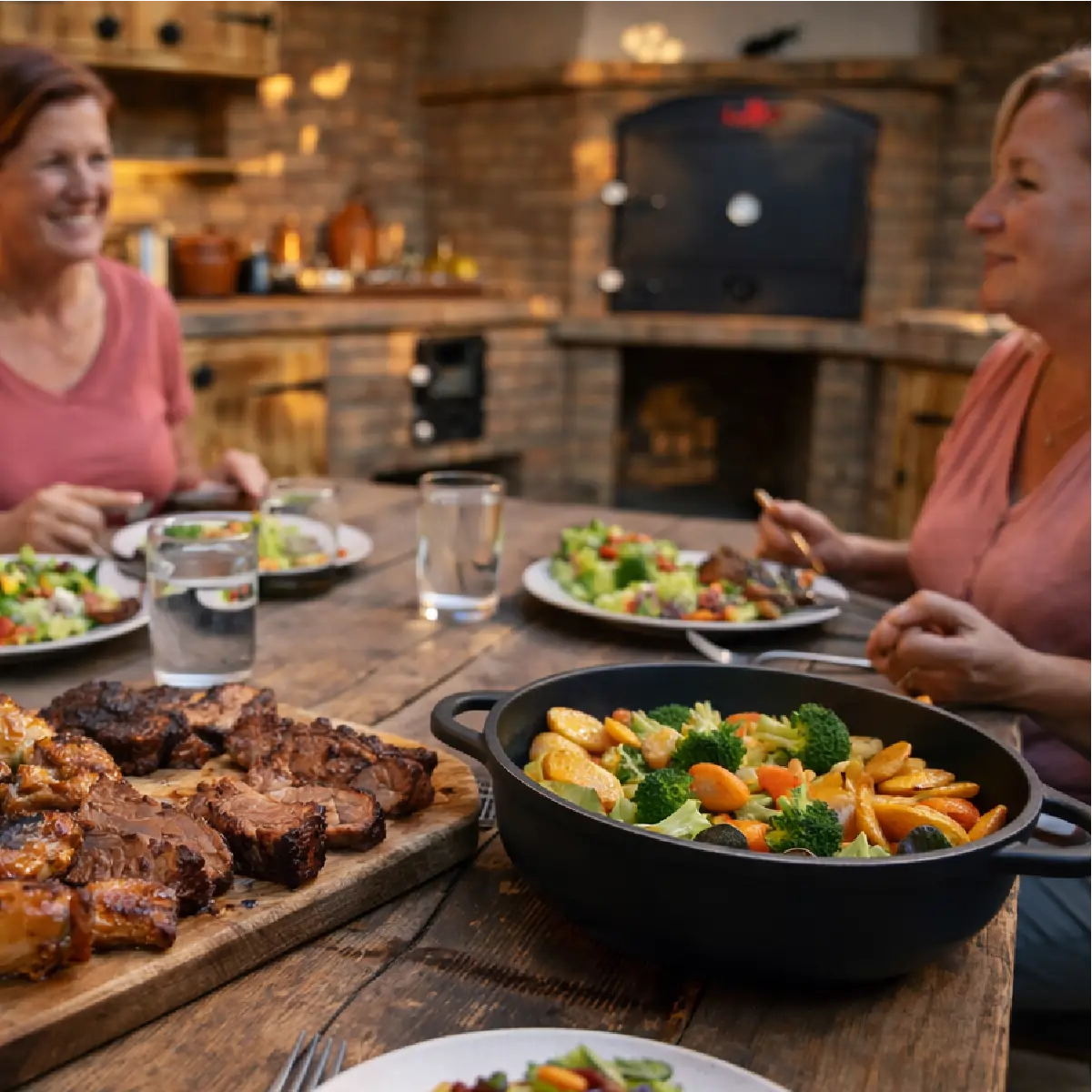
Image description: choosing the right cookware for a Tynker heat-storage oven. Image title: The Right Cookware for a Tynker Oven. Image description detail: the image emphasises that the right cookware and support are an important part of good cooking results in a heat-storage oven.
How do you choose a model?
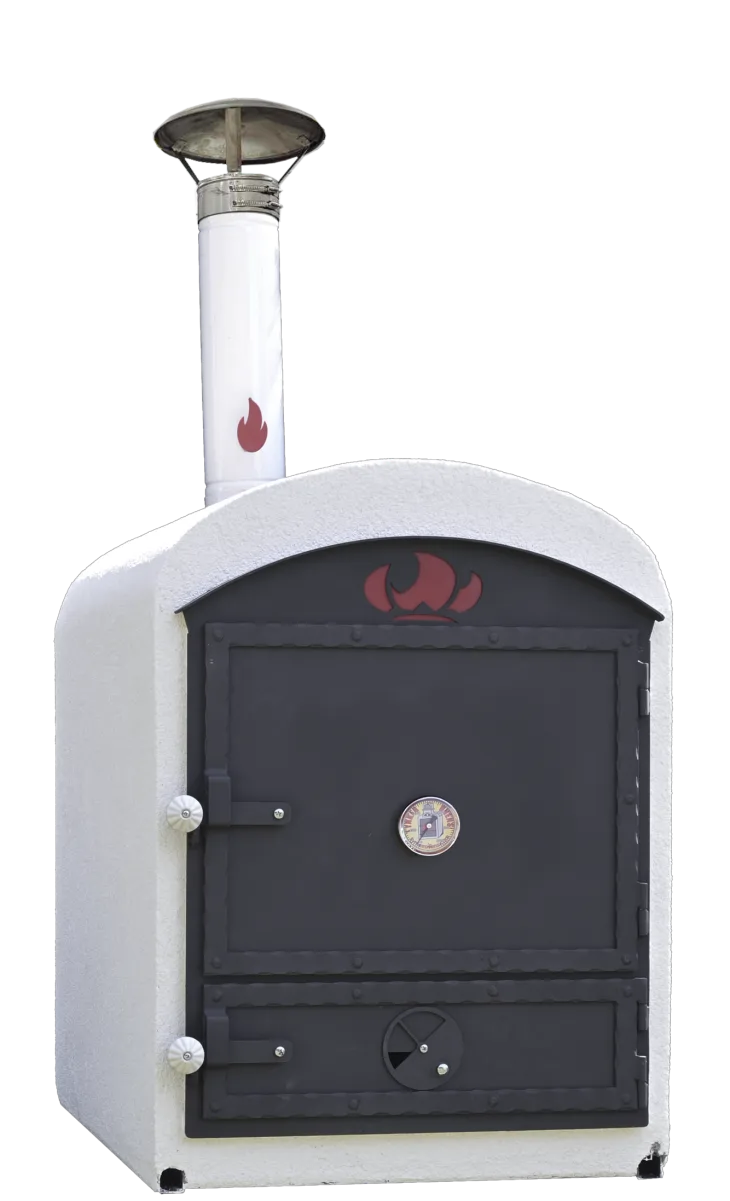
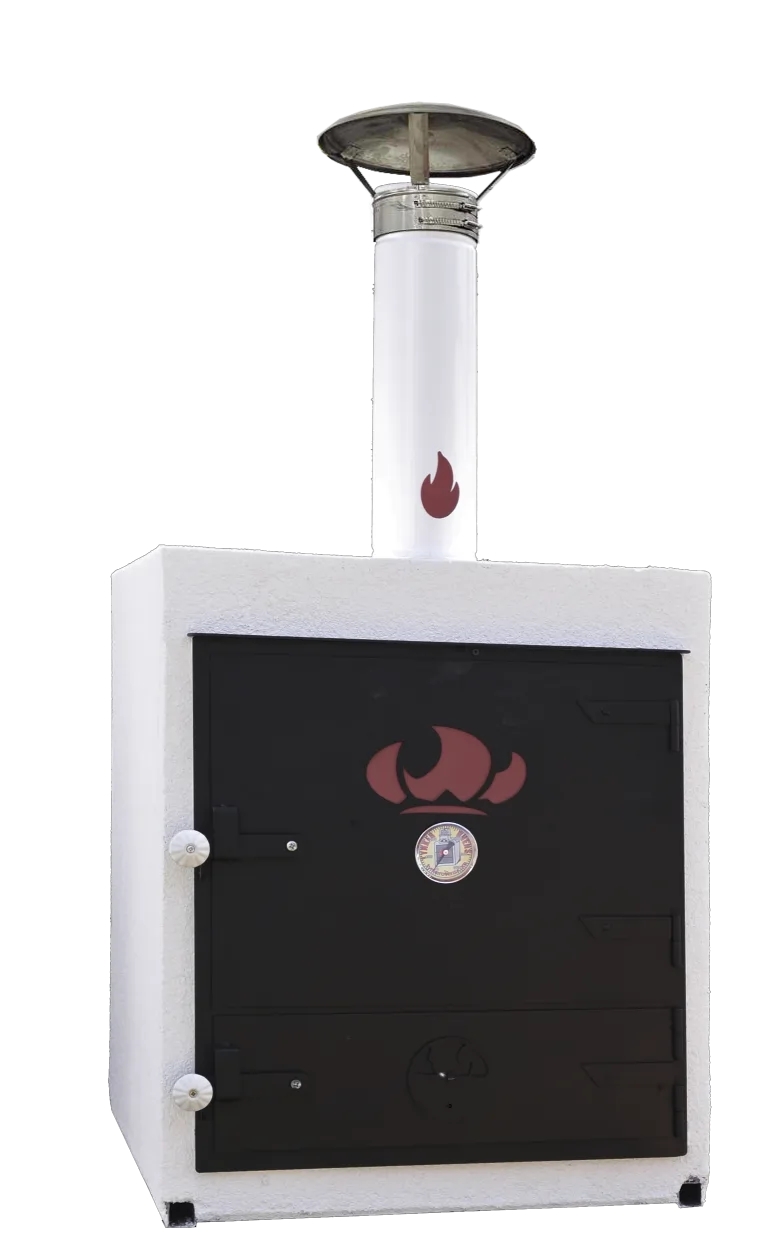
The core principle of mobile heat-storage ovens is the same: a firebrick-lined, heat-storing chamber and thermal mass stabilise the heat. The difference between models appears mainly in design, placement options and how the oven fits into a real outdoor space.
For choosing, we recommend this article: how to choose a wood-fired oven, and from the installation side: mobile oven delivery, placement and installation.
Do you want to avoid guessing?
If you tell us whether the oven will stand in an open space, under a pergola or inside a built outdoor kitchen, it becomes much easier to choose the model that fits you.
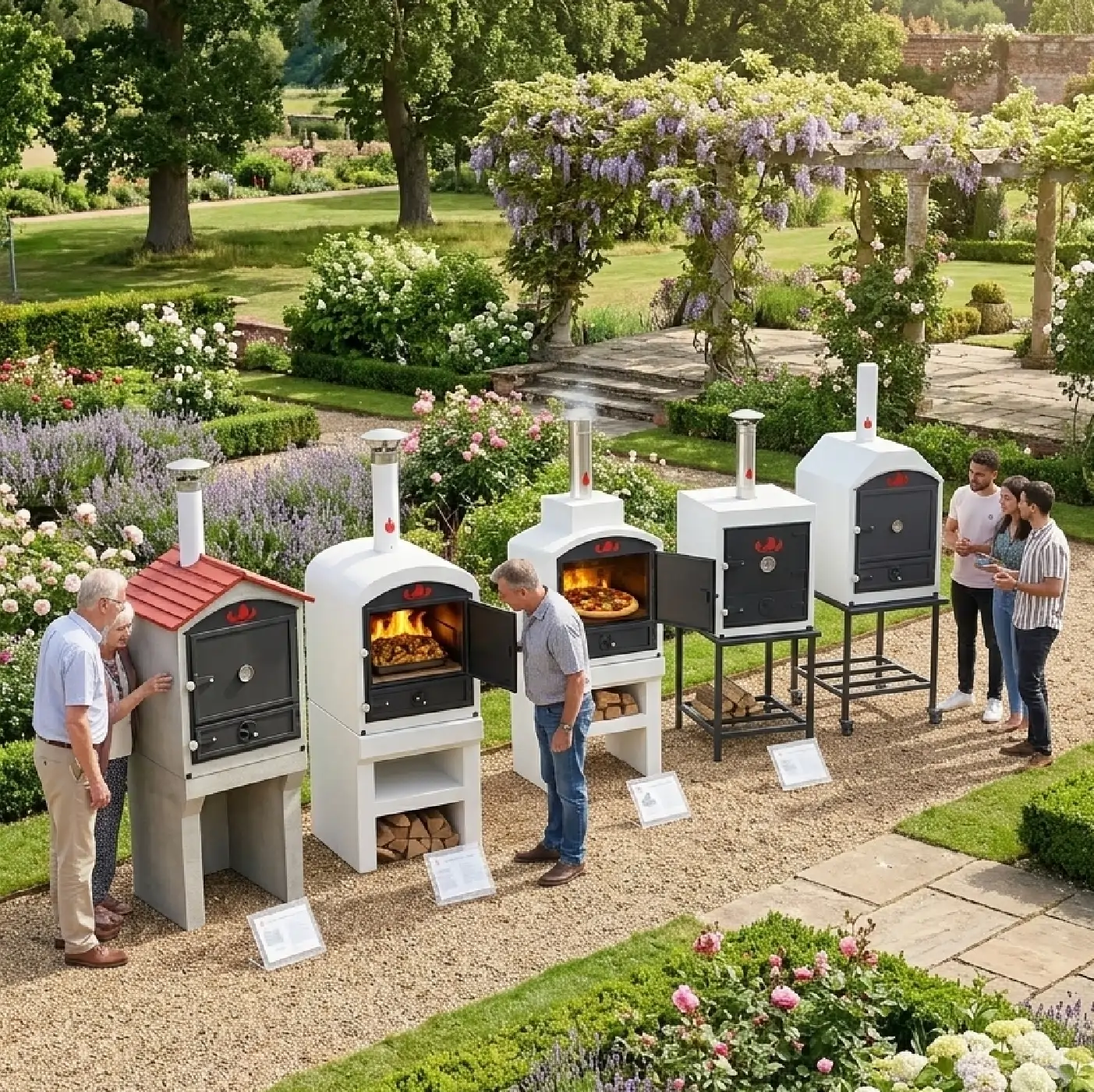
Image description: Tynker heat-storage ovens in a display space. Image title: Tynker Heat-Storage Ovens in a Display Space. Image description detail: the image shows Tynker heat-storage ovens in an exhibition or display environment.
Further recommended articles
- How to Choose a Wood-Fired Oven
- Mobile Oven – Delivery, Placement and Installation
- How a Heat-Storage Wood-Fired Oven Works
- Firing up: when does the oven really start working well?
- Heat zones and baking rhythm
- FAQ – the most common questions
FAQ – short answers
How long does a heat-storage oven take to heat up?
That depends on the wood, the weather and the temperature range you want, but the key is not only time. The real goal is that heat enters the structure and a stable ember bed forms.
What wood is best?
Dry hardwood. Wet wood smokes more, performs worse and makes cooking much less predictable.
Is it good for bread and meat too?
Yes. One of the biggest strengths of heat storage is exactly that the oven works not only for pizza, but also very well for bread, meat and slower styles of cooking. If you want the detailed view, read the heat zones and the firing guide.