Mobile Heat-Storage Wood-Fired Oven – Delivery, Placement and Installation
A practical guide to moving the oven in your garden, choosing the right base and stand, setting the right working height, keeping safe distances and handling the first firing without mistakes.
Mobile Heat-Storage Wood-Fired Oven – Delivery, Placement and Installation
One of the most common questions before buying is simple: “Once I place it somewhere, does it stay there forever?” The short answer is no. A mobile oven is not a fixed concrete structure – but it is also not a 40 kg grill. It has serious weight, and that weight needs to be handled with sense and respect.
Before going deeper, it helps to read what a heat-storage wood-fired oven is. If you are still deciding between categories, continue here: how to choose a wood-fired oven.
📦 Weight and moving the oven in the garden
The AiO models usually fall into the 140–190 kg range. They arrive in one piece and are ready for use. That is already a serious object – but it does not mean you need a crane for normal garden placement.
In practice, this is usually enough:
- 4 people
- 2 strong metal bars
- planned lifting and slow, controlled movement
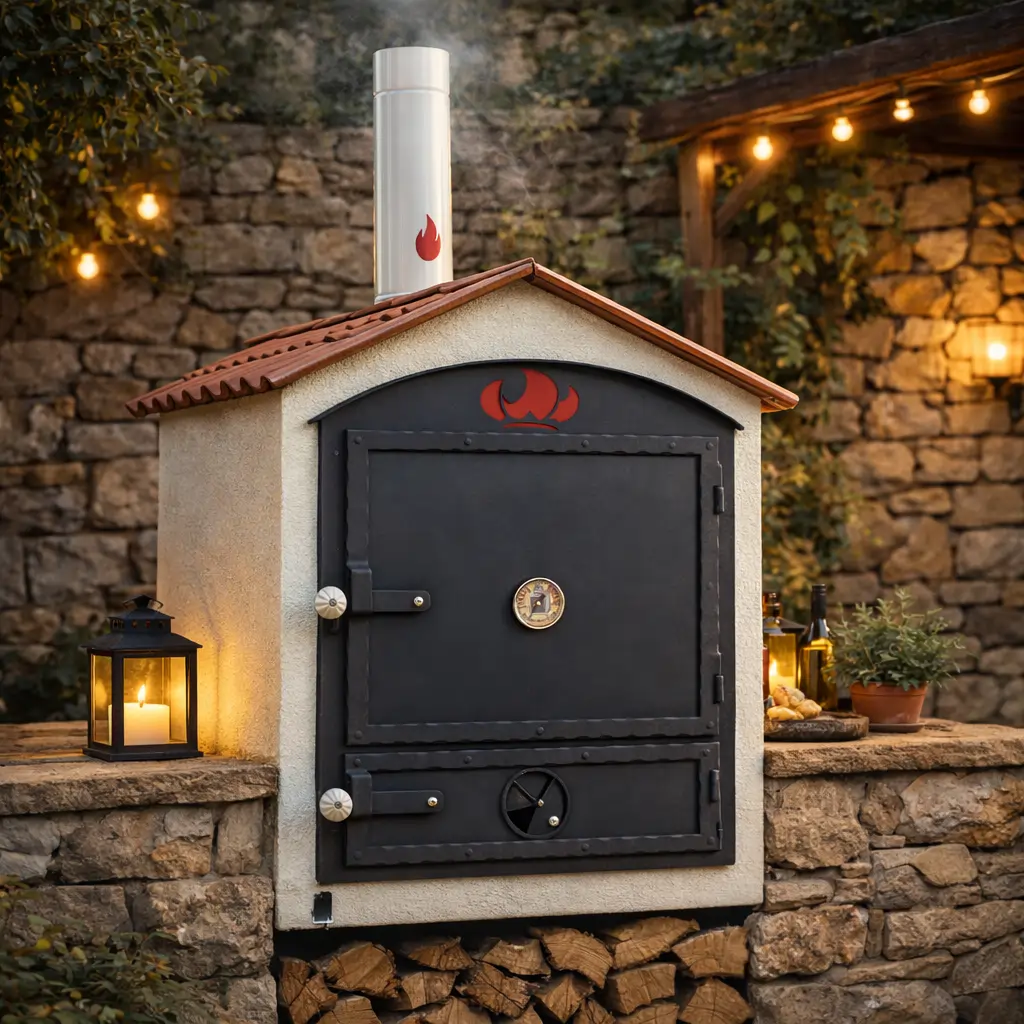
Image description: safe movement of a mobile heat-storage wood-fired oven with stable support and controlled lifting. Image title: Moving a Mobile Heat-Storage Oven with Stable Support. Image description detail: the image shows safe garden movement of a mobile oven before installation or during repositioning.
Basic rules that matter:
- do not tilt it unnecessarily
- do not drag it over hard edges
- always keep it properly supported
To understand what is happening inside the oven, also read how a heat-storage wood-fired oven works. If you want the structural comparison, continue with why not all mobile ovens are the same.
🏗 Does it need a concrete base?
A heavy foundation block like the one often used for a masonry oven is not necessary. What does matter is that the surface is level, load-bearing and stable over time.
Good solutions can include:
- paving stones
- concrete slab or concrete surface
- a stable terrace
- reinforced outdoor paving with real load capacity
Not recommended:
- grass
- bare soil
- soft surfaces that settle over time
If you want the bigger decision logic as well, continue with how to choose a wood-fired oven. As a foundation article, this remains essential: what a heat-storage wood-fired oven is.
📏 Why does the right height matter?
The oven should not sit directly on the ground. The ideal working height is usually around 70–85 cm. This is not about luxury comfort. It is about daily usability over the long run.
- more ergonomic handling
- easier pizza loading
- better view into the oven chamber
- better heat control during use
For a better understanding of cooking behaviour, also read heat zones in a wood-fired oven. If pizza is one of the main goals, continue with pizza oven temperature and how to bake better pizza.
🧱 What kind of stand makes sense?
At 140–190 kg, the stand must not flex, wobble or twist. The oven needs a straight, stable base that holds the load properly. Good solutions can include a masonry stand, a welded steel stand, a lightweight concrete base or another custom-built support – as long as it is genuinely strong enough.
How to Choose a Wood-Fired Oven
🏗 Factory stands and ready-made solutions
If you want something practical and proven instead of experimenting, ready-made stands are often the easiest answer. They are sized for the oven, matched to its weight and make everyday use more predictable from the start.
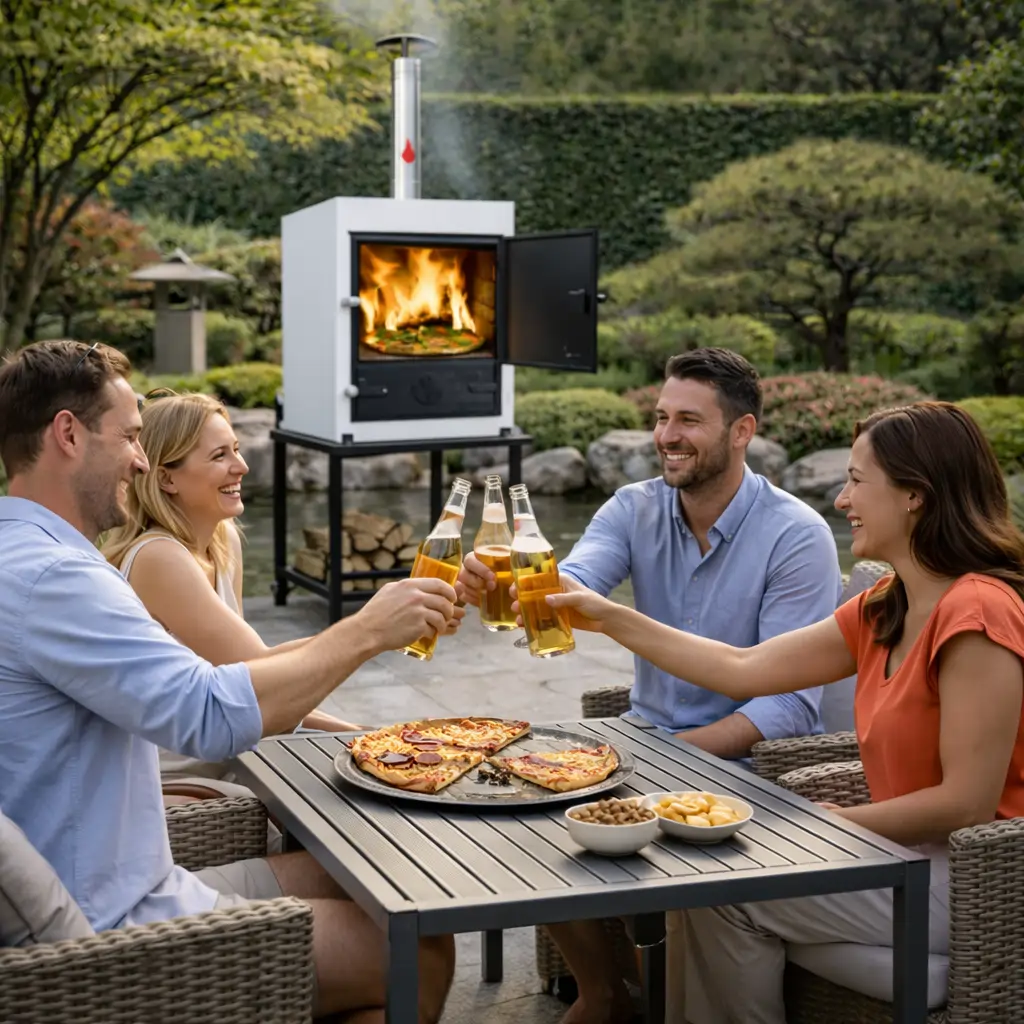
Image description: Tynker Kybos heat-storage wood-fired oven on a metal stand with stable and ergonomic placement. Image title: Tynker Kybos Heat-Storage Oven on a Metal Stand. Image description detail: the image shows a ready-made stand solution that supports correct working height and stable daily use.
🌤 Under a roof or in an open space?
The surface finish is weather-resistant, so the oven does not have to live only under a roof. Still, for long-term use, some kind of partial cover or winter protection is usually the better solution. In strong frost, it is sensible to remove the thermometer.
A pergola or covered terrace is always an advantage. In this type of setup, the Delta model can also offer extra protection thanks to its roofed form.
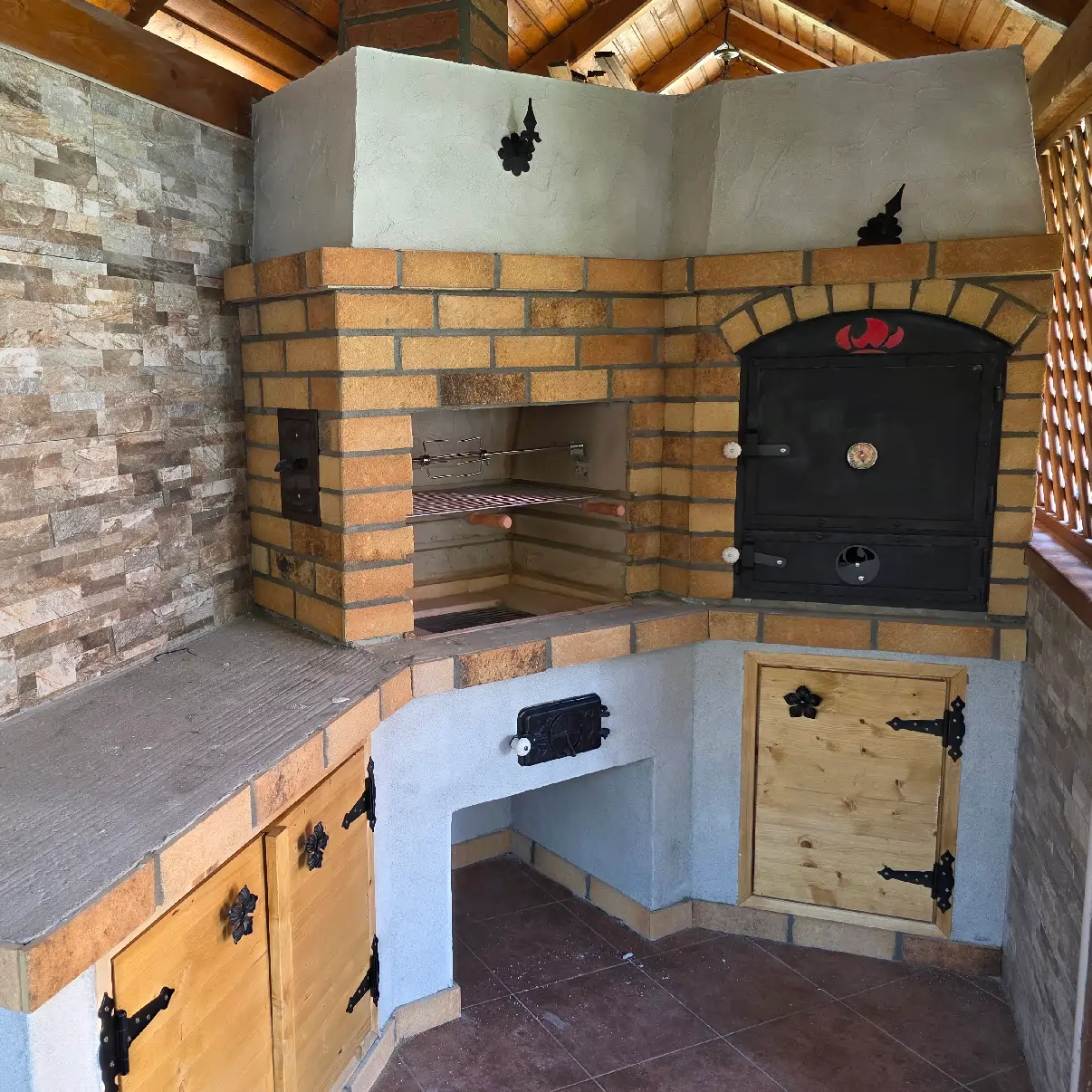
Image description: built outdoor kitchen with a Tynker heat-storage wood-fired oven and integrated grill. Image title: Built Outdoor Kitchen with a Tynker Heat-Storage Oven. Image description detail: the image shows a more fixed outdoor kitchen setup where airflow and working space around the oven are important.
In connection with that, also read top or rear flue exit for a wood-fired oven. If long-term use matters to you, continue with wood-fired oven maintenance, cracks and winter care.
📐 Safe distances
Recommended minimums:
- 60–80 cm of free space around the oven
- good ventilation
- do not place it directly against a flammable wall
Heat in this kind of oven is concentrated and real. When planning an outdoor kitchen, think beyond the footprint: pizza peel, firewood, trays, prep space, movement around the oven and how naturally the whole workflow fits together.
For smoke routing and layout planning, also read top or rear flue exit for a wood-fired oven. If you want the full operating logic, continue with how a heat-storage wood-fired oven works.
🔥 First firing: what to do and what not to do
The first firing is not about pizza. The goal is to let the structure warm through gradually, allow residual moisture to leave the system and let the oven stabilise. Full cooking load comes later.

Image description: first firing of a heat-storage wood-fired oven with gradual warming and stabilisation. Image title: First Firing of a Heat-Storage Wood-Fired Oven. Image description detail: the image illustrates the careful first warm-up process needed for safe and durable use.
How to Fire Up a Wood-Fired Oven
👉 Quick answers in one place:
Wood-Fired Oven FAQ
If pizza is the main goal after that, also read pizza oven temperature and how to bake better pizza. For oven chamber behaviour, continue with heat zones in a wood-fired oven.
🔥 Summary
One of the biggest advantages of a mobile heat-storage wood-fired oven is exactly this: you do not need to build an entire construction project around it. But for the oven to work well, the support, height, surface and placement still need to be thought through properly.
As two central guide articles, we recommend what a heat-storage wood-fired oven is and pizza oven temperature and how to bake better pizza.