How to Choose a Wood-Fired Oven
Most people start with the same question: should we build a large masonry oven, buy a kamado, or choose a mobile wood-fired oven? The right answer depends less on the product category and more on how you actually want to cook.
Before choosing, it also helps to read what a heat-storage wood-fired oven is. If pizza is one of your priorities, we also recommend pizza oven temperature and how to bake better pizza.
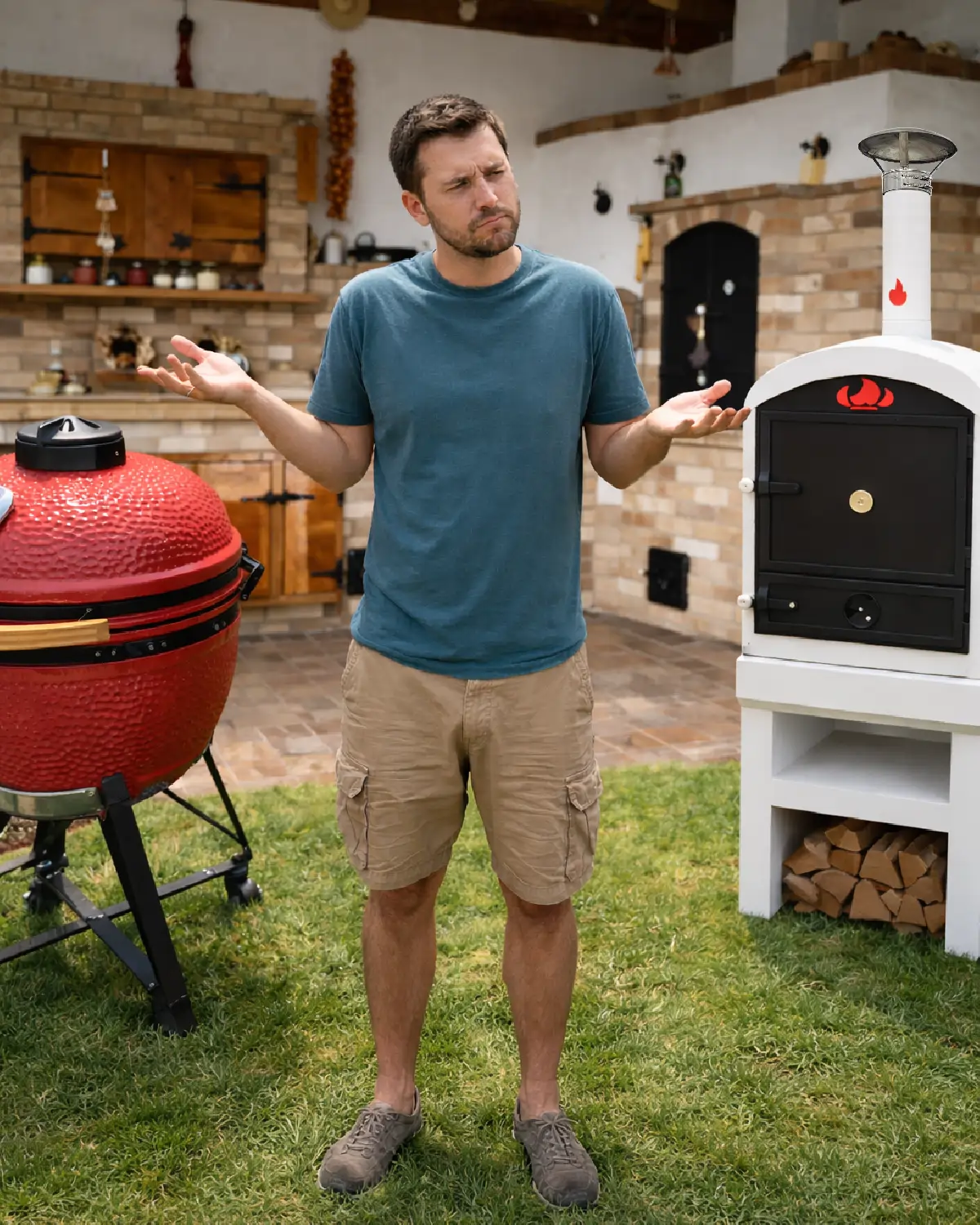
The real decision is not about the tool. It is about your cooking rhythm.
Hero image for a guide about choosing a wood-fired oven, introducing the decision between a masonry oven, a kamado and a mobile oven based on real outdoor cooking use.
The romance of a masonry oven
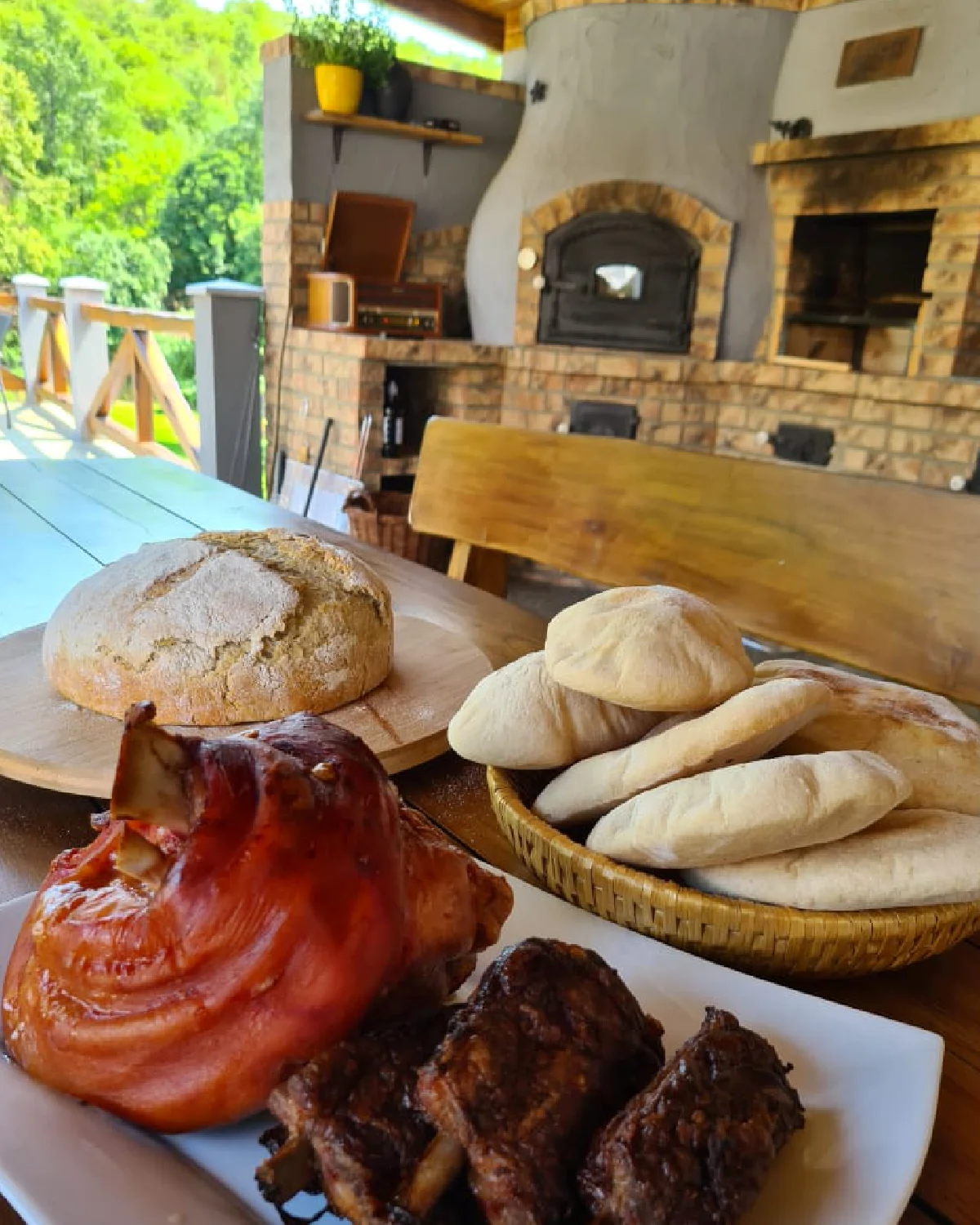
Built outdoor masonry oven in a garden kitchen. The image shows the fixed installation and attractive presence of a masonry oven, but also suggests the lower flexibility compared to a mobile solution.
A masonry oven can be beautiful and deeply satisfying, especially if you are building a long-term outdoor kitchen around it. But it also comes with its own rhythm.
- longer firing time, often 2–3 hours
- higher wood consumption
- fixed placement
- less flexibility in everyday use
That does not make it bad. It simply makes it a better fit for some people than for others. If you want to understand the heat-storage side of oven performance, read what a heat-storage wood-fired oven is. For a direct category comparison, continue with kamado vs masonry oven vs offset vs mobile oven.
Kamado and BBQ cooking
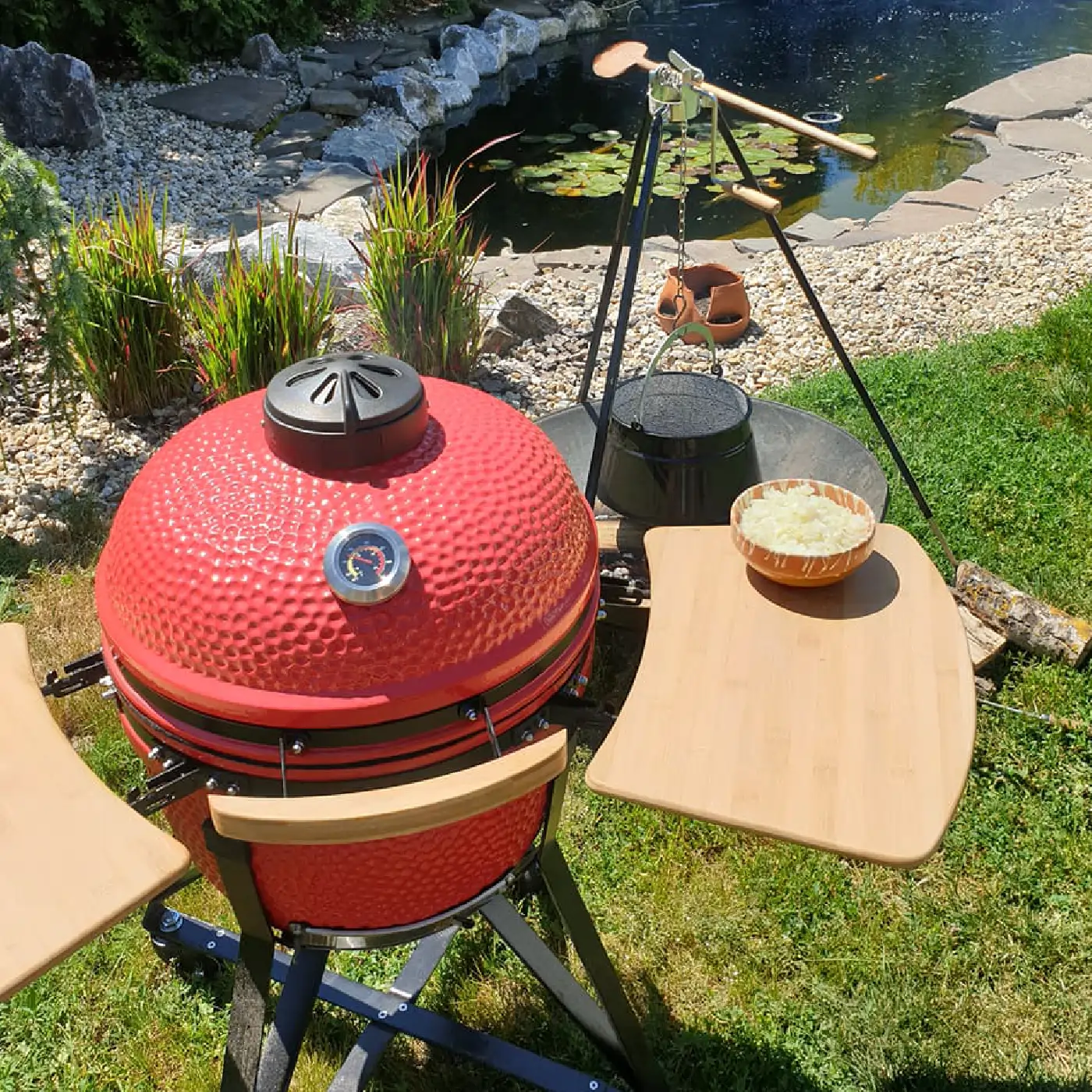
Kamado grill in an outdoor setting. The image illustrates the kamado style of cooking, especially its suitability for controlled barbecue and lower-temperature heat management.
A kamado is strong in its own field. It is excellent for BBQ, roasting and controlled lower-temperature cooking. But it does not replace the experience or heat behaviour of a true wood-fired oven floor.
If what you want is pizza, bread, roasting and retained heat from a real oven structure, then a kamado and a wood-fired oven should not be treated as the same category.
For the full comparison, read kamado vs masonry oven vs offset vs mobile oven. If you want to understand oven behaviour first, go to how a heat-storage wood-fired oven works.
A mobile wood-fired oven
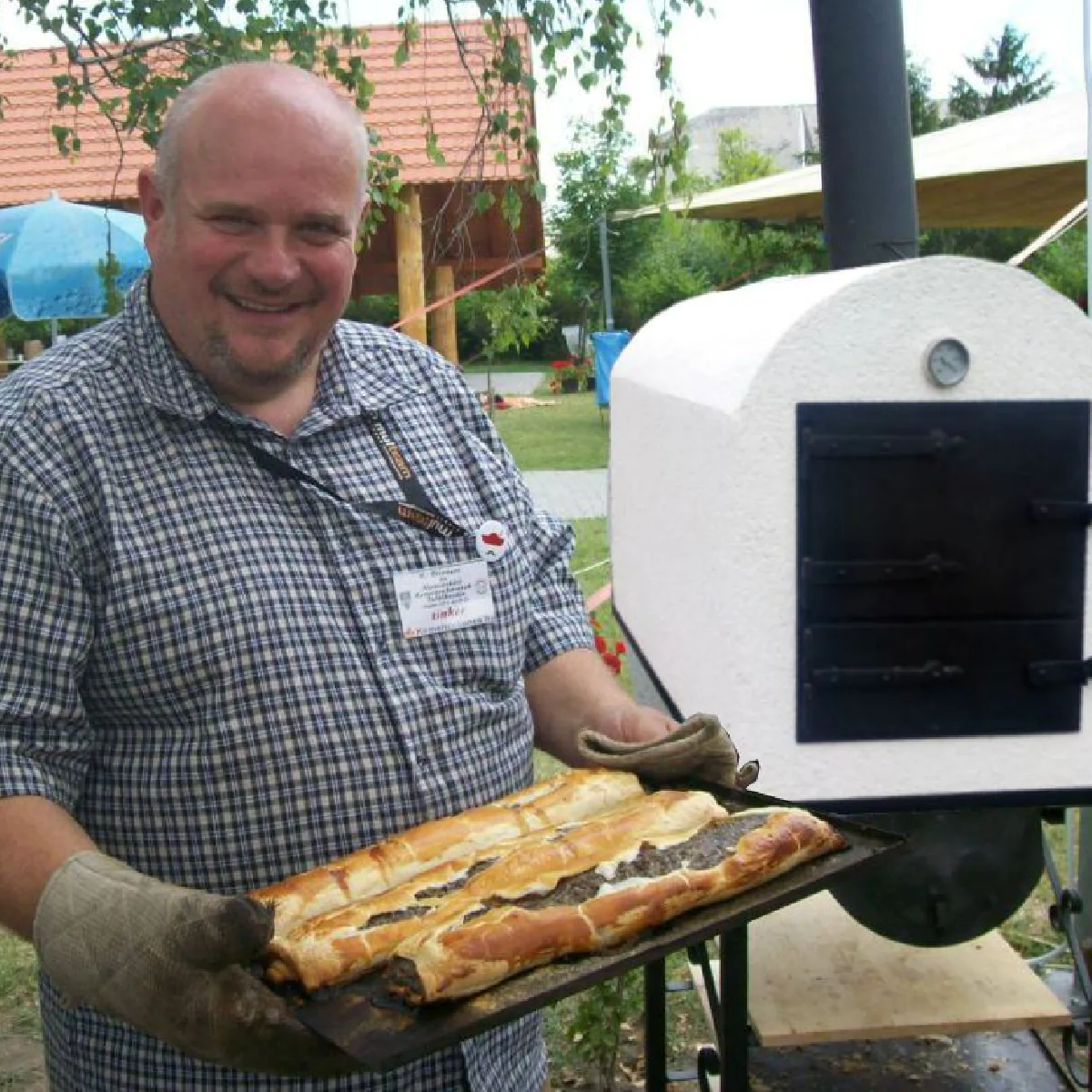
Tynker mobile wood-fired oven in real use. The image illustrates the practical strengths of a mobile oven that can be placed more flexibly and used with less effort than a large masonry build.
A well-designed mobile oven can make everyday wood-fired cooking much more realistic. Less preparation, less wood, faster access to useful heat and far easier integration into real outdoor life.
- lower wood consumption
- more practical heating rhythm
- easier everyday use
- better flexibility in placement and installation
This is also where many people make a mistake: they assume all mobile ovens are more or less the same. They are not.
If placement matters, also read mobile oven delivery, placement and installation. For the structural background, see how a heat-storage wood-fired oven works. And for the key difference article, continue with why not all mobile ovens are the same.
What makes Tynker different?
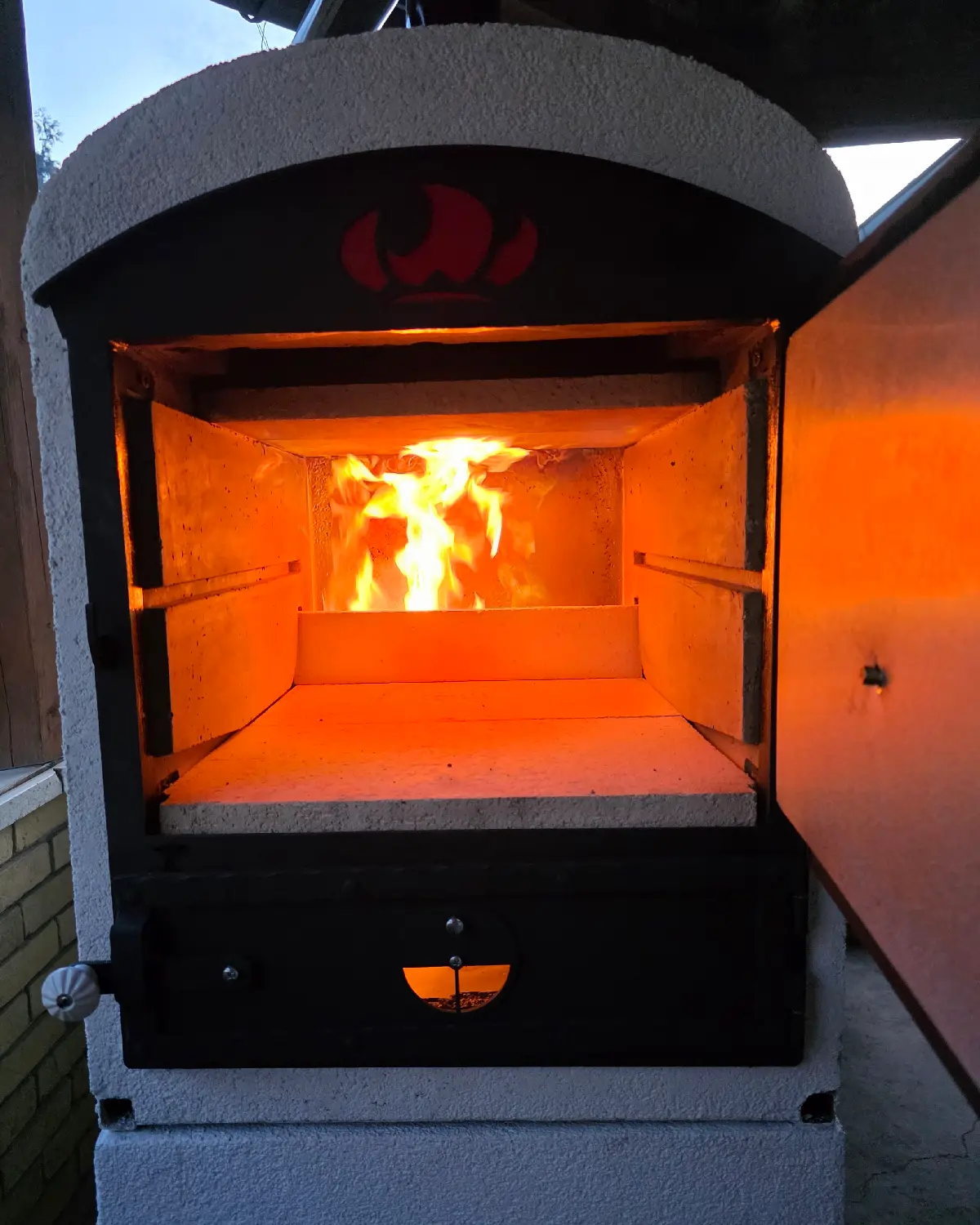
Tynker wood-fired oven in operation with visible fire and an active oven chamber. The image supports the idea of retained heat, practical firing rhythm and more stable cooking performance.
Tynker is not positioned as just another generic mobile oven. The point is not only that it is mobile. The point is how it works inside.
Many ovens may look similar from the outside. The real difference is in:
- heat storage
- flue gas path
- stability during repeated firing
- material behaviour over time
- predictable baking performance
Tynker is not an ordinary imitation oven built around a simplified YTONG-style idea. It is a proprietary heat-storage structure based on fire-resistant materials and a clay-concrete development logic aimed at real long-term use.
For the full background, read what a heat-storage wood-fired oven is. If firing and use are your next questions, continue with how to fire up a wood-fired oven.
Models
Choosing the right model depends on your space, your cooking rhythm and what matters most to you: compactness, visual presence, workflow around the oven, or the role it will play in your outdoor kitchen.
- Delta
- Sigma
- Etalon
- Kima
- Kybos
Still not sure which direction is right for you?
That is normal. The best choice depends on how you want to cook, how often you will use the oven and what kind of setup makes sense in your space.