How a Heat-Storage Wood-Fired Oven Works – What Creates Stable Temperature in a Mobile Accumulation System?
The flame is not the main point. Stable baking comes from stored heat: the firebrick mass, the well-controlled flue gas path and the regulation of airflow. Here we explain it clearly, without marketing noise.
The flame is not the main thing. Stored heat is.
Many people watch the size of the fire first. But the actual baking is not done by the flame itself – the flame is only the visible part.
The real work is done by heat that has been absorbed, stored and radiated back into the oven chamber. That is why a good heat-storage oven feels calm, even and predictable in use.
If you want the deeper foundation behind this, also read what a heat-storage wood-fired oven is. If you want the practical next step after that, continue with how to fire up a wood-fired oven.
How does a well-designed heat-storage wood-fired oven work?
The principle is simple, but very precise:
- Heat is created in the fire chamber.
- That heat does not disappear straight into the chimney.
- First, it is absorbed into the heat-storage layer.
- The structure then releases that heat gradually and evenly back into the oven chamber.
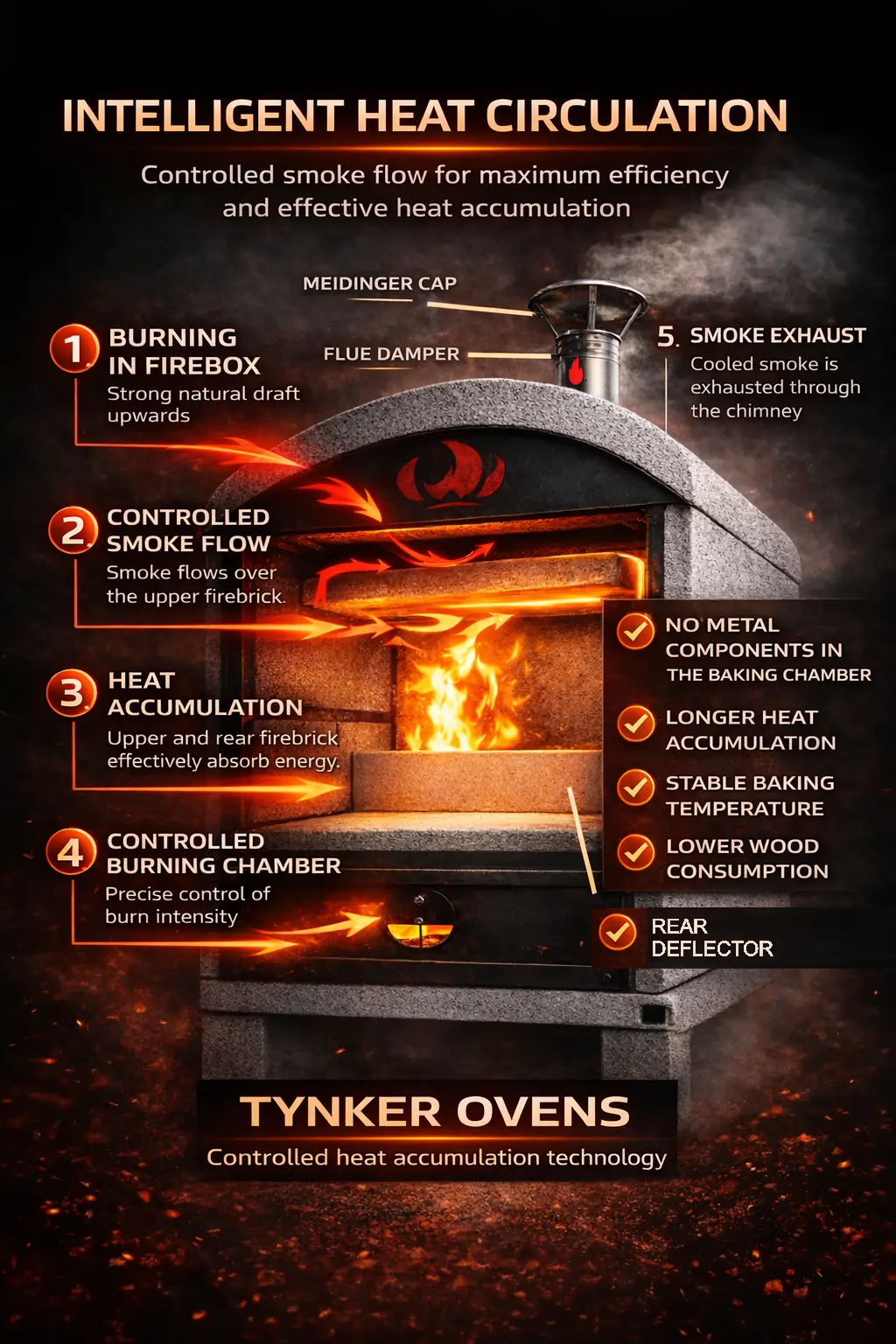
Image description: intelligent heat flow in a heat-storage wood-fired oven with a controlled flue gas path and retained heat. Image title: How a Heat-Storage Wood-Fired Oven Works. Image description detail: the image shows how flue gas flow and the heat-storage structure work together to create more stable baking temperature.
This is why the “magic” in real use feels different: pizza is less likely to burn underneath, meat dries out less easily, and temperature does not swing wildly up and down. The oven walls are not decoration – they are active parts of the system.
For pizza-focused use, also read pizza oven temperature and how to bake better pizza. For practical heat behaviour inside the oven, continue with heat zones in a wood-fired oven.
The role of firebrick – this is physics, not marketing
Firebrick is not there because it sounds impressive. It is there because it can store a large amount of heat and then release it back slowly and evenly. That is exactly what makes the baking environment steadier and more predictable.
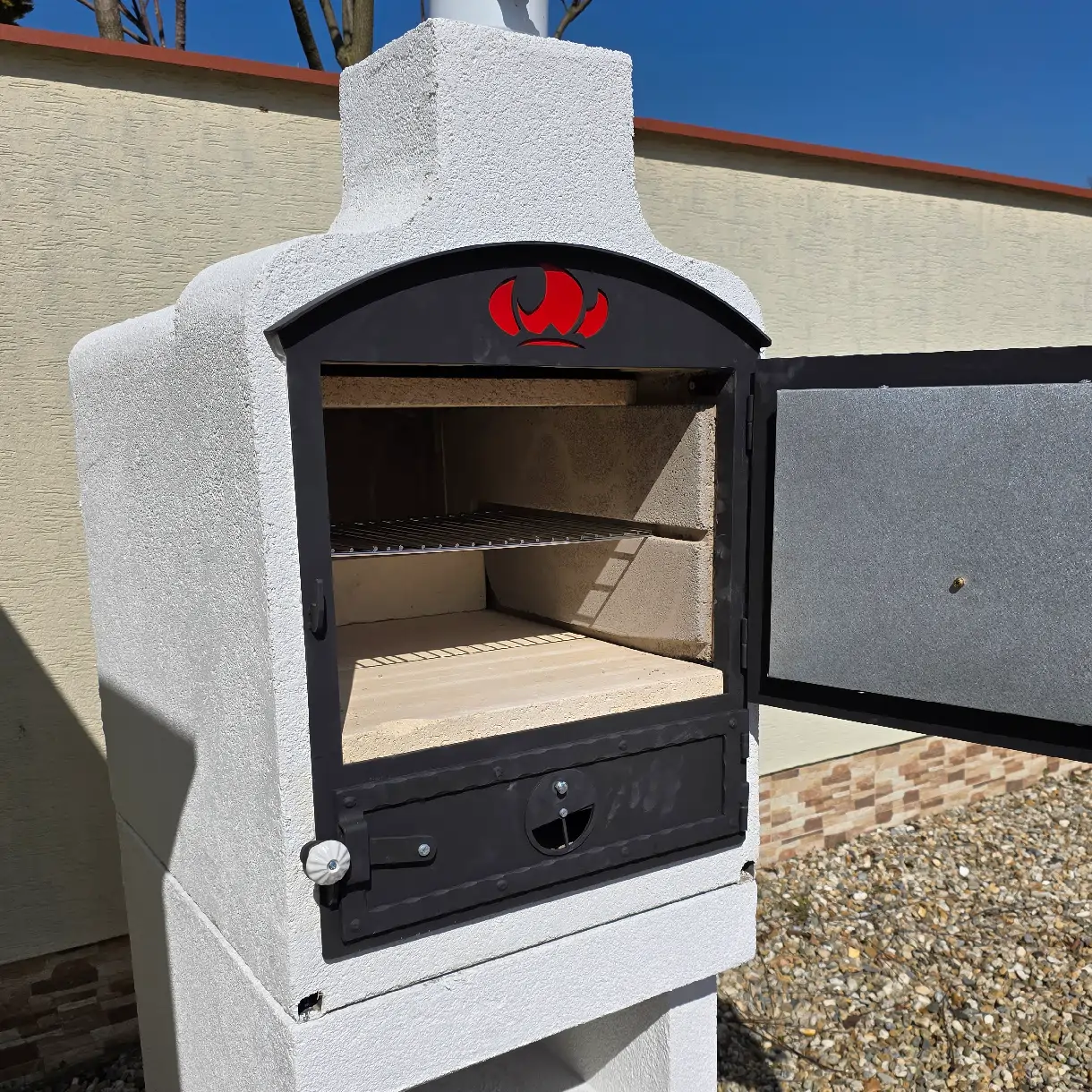
Image description: firebrick material inside a Tynker heat-storage wood-fired oven storing large amounts of heat and releasing it gradually. Image title: Firebrick Heat Storage in a Tynker Oven. Image description detail: the image illustrates the role of firebrick in more even and longer-lasting oven heat.
In a well-designed accumulation oven, you can realistically bake pizza in the 300 °C range, later cook meat around 200 °C, and still have 80–100 °C left in the oven chamber the next day. That is not luck. That is exactly what heat storage is for.
👉 Related guides:
How to Fire Up a Wood-Fired Oven
Wood-Fired Oven FAQ
Pizza Oven Temperature and How to Bake Better Pizza
Air regulation – this is where stability is decided
The heat-storage mass is the foundation. But without proper regulation of airflow, the system could not behave in a stable way. Temperature depends on how much air enters, how intensely the fire burns, and how the flue gases are allowed to leave the system.
- adjustable fire door
- butterfly damper on the chimney path
- controlled airflow through the oven
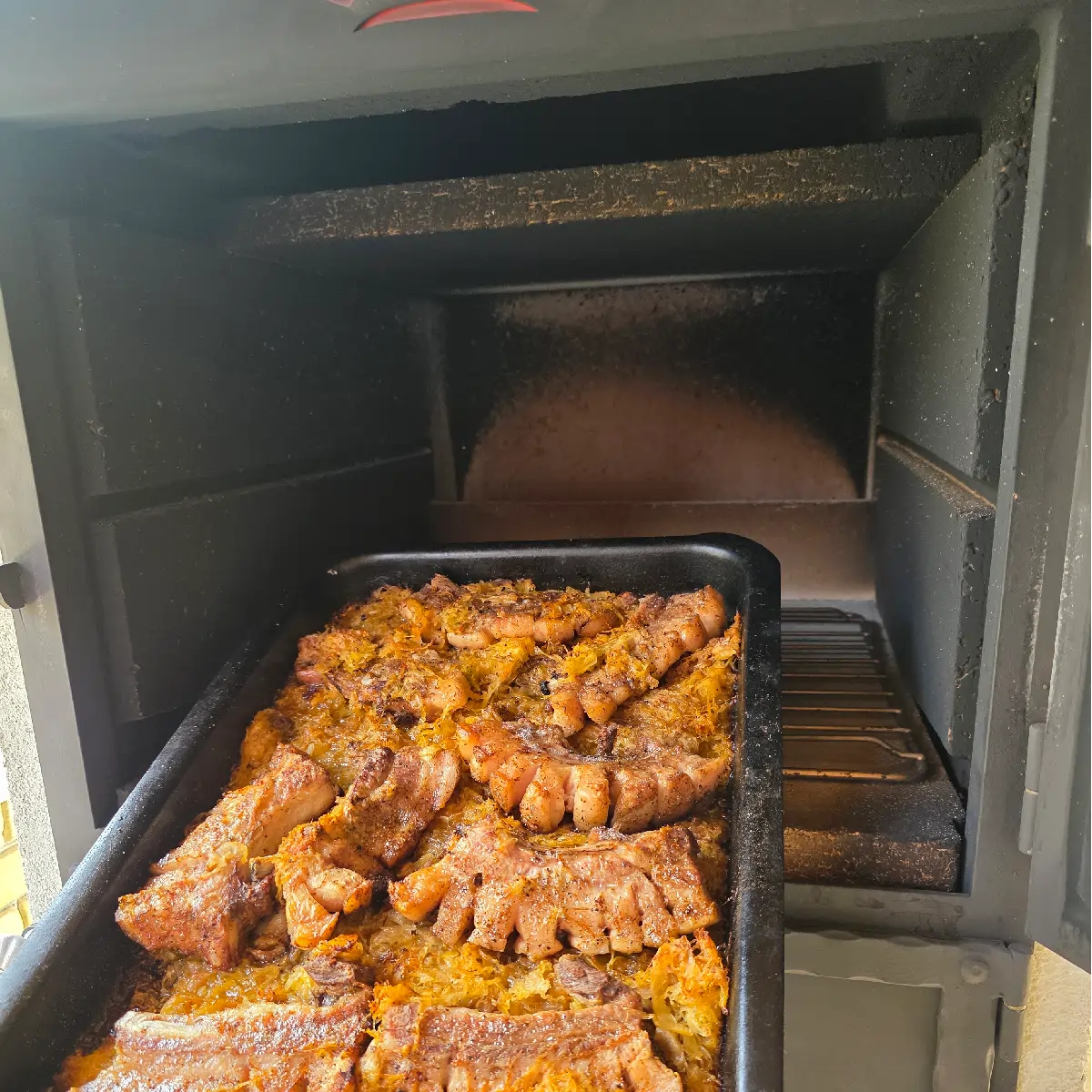
Image description: a Tynker heat-storage oven working as a system where retained heat and airflow regulation create stable temperature. Image title: A Tynker Oven as a Controlled Heat-Storage System. Image description detail: the image shows that oven behaviour depends not only on the visible flame, but on the coordination of the whole system.
In connection with that, also read top or rear flue exit for a wood-fired oven. For practical firing technique, continue with how to fire up a wood-fired oven.
Why does a well-designed oven not simply crack apart?
The most common reasons cracks appear are these:
- first firing that is too aggressive
- insufficient drying
- poor material structure and weak construction logic
Small hairline cracks can be natural in some situations because the material is working under heat. The real point is whether the structure has been designed to handle thermal expansion from the beginning.
👉 Related article:
Wood-Fired Oven Maintenance, Cracks and Winter Care
👉 Quick answers:
Wood-Fired Oven FAQ
How is this different from a masonry oven or a kamado?
A masonry oven works with a huge thermal mass and a classic character, but it often needs 2–3 hours of firing, uses more wood and is fixed in one place. A mobile heat-storage oven, by contrast, can often become usable after around 30–40 minutes, can be more economical and fits into a garden far more flexibly.
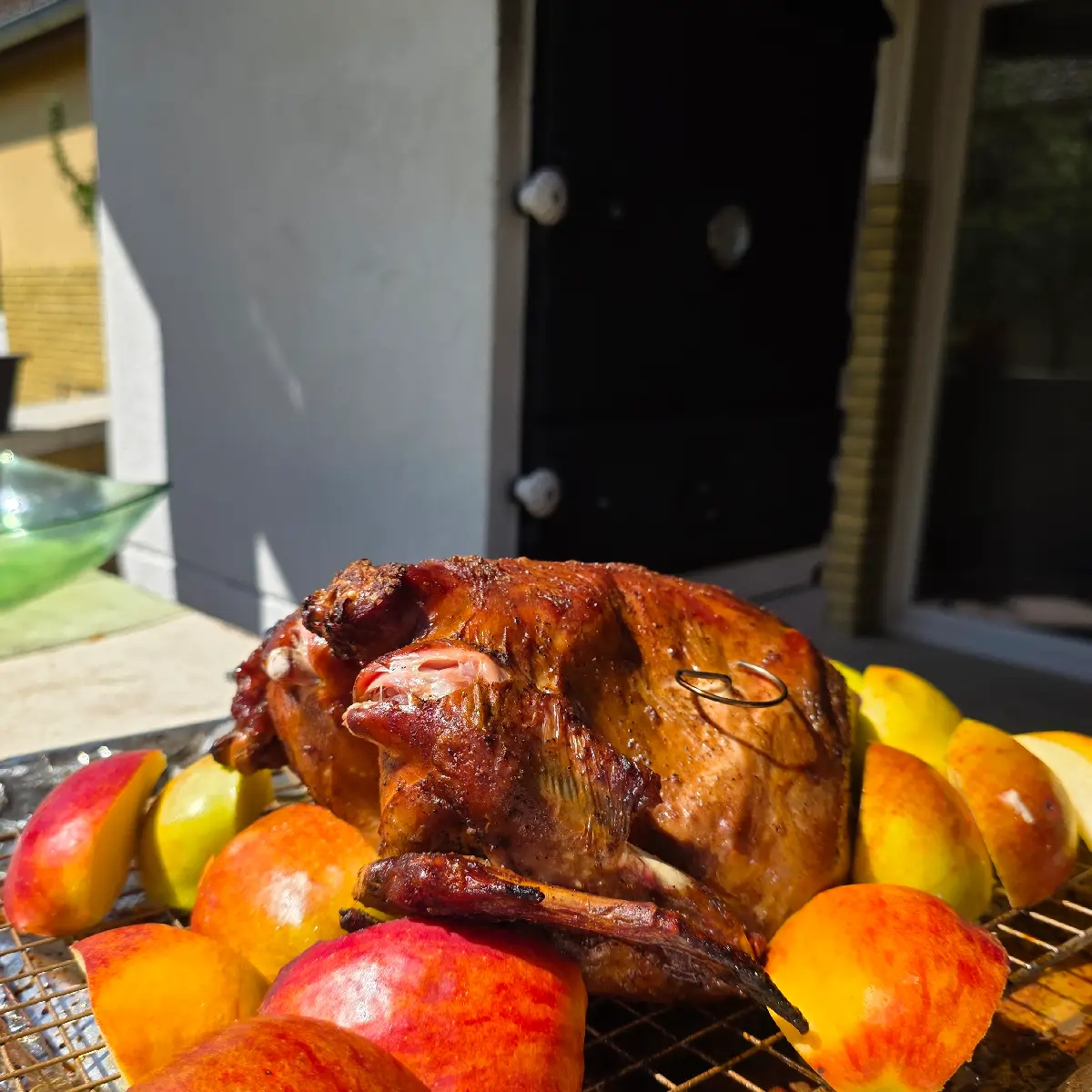
Image description: a mobile heat-storage wood-fired oven giving a different style of use while still working with stable retained heat. Image title: The Cooking Experience of a Mobile Heat-Storage Oven. Image description detail: the image suggests that a mobile oven has a different character than a masonry build, but can still be stable, versatile and satisfying in real use.
👉 More detailed comparison:
Kamado vs Masonry Oven vs Offset vs Mobile Oven
👉 Decision guide:
How to Choose a Wood-Fired Oven
👉 Installation considerations:
Mobile Oven Delivery, Placement and Installation
Why is it important to understand this before buying?
Because shape is not what decides the real result. What matters is whether the oven feels predictable, stable and enjoyable in use – without constant correction and frustration. Once you understand heat storage, you stop watching only the flame and start understanding the system itself.
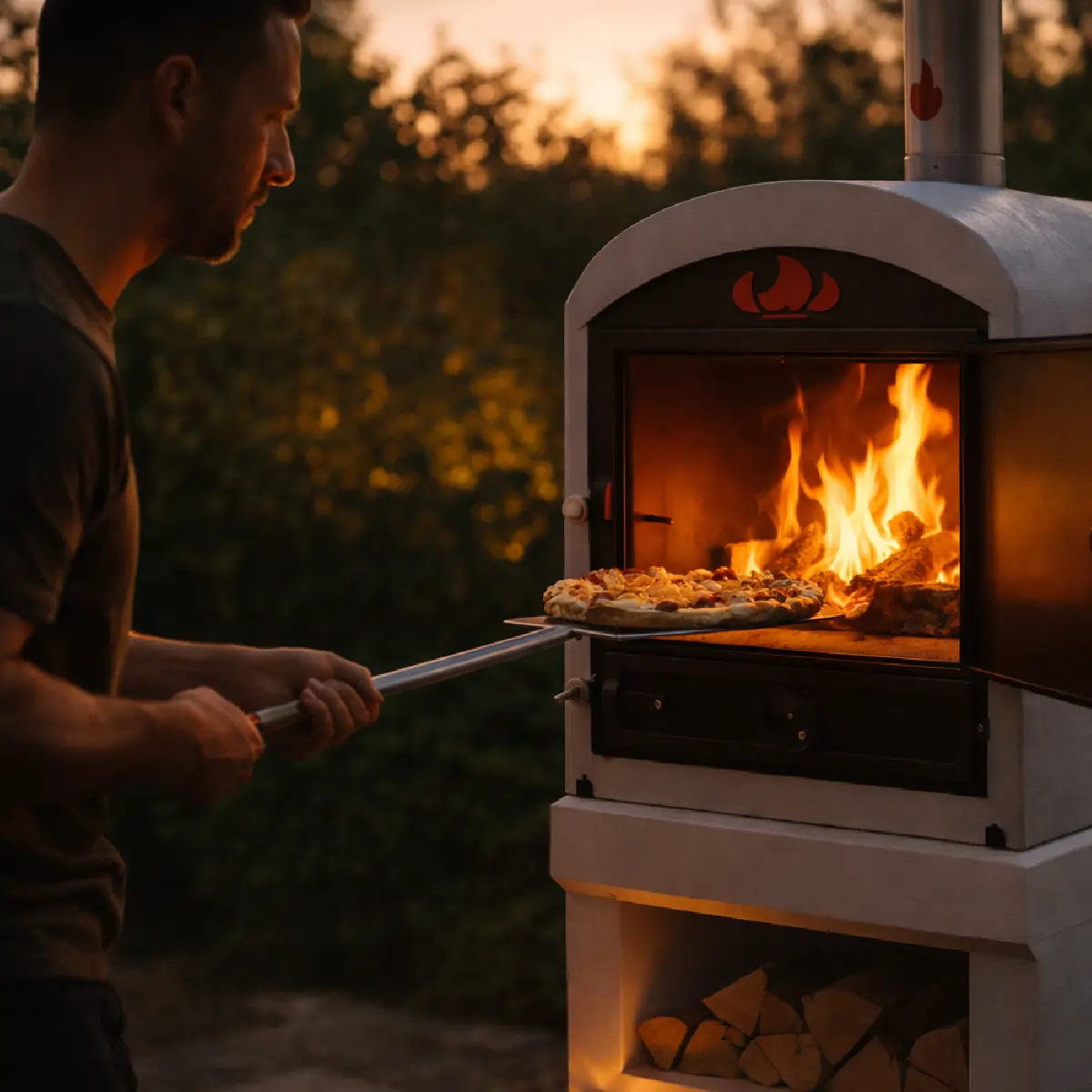
Image description: Tynker mobile heat-storage oven used for multiple kinds of food including pizza, bread, meat and BBQ. Image title: Tynker Mobile Heat-Storage Oven for Multiple Cooking Styles. Image description detail: the image shows the versatility of a mobile accumulation oven across several cooking situations.
If you want the next logical step from here, we recommend these two articles: what a heat-storage wood-fired oven is and pizza oven temperature and how to bake better pizza.
🔥 Summary
If you are looking for a mobile wood-fired oven that works with real stored heat – not just visible flame –
then when choosing, pay attention to the internal structure, not only to the outer shape.