How to Fire Up a Wood-Fired Oven Properly? The Art of Building a Strong Ember Bed
Most failed bakes are not caused by the recipe. They are caused by the fire. Once you understand the role of the ember bed and the rhythm of adding wood, the oven stops feeling unpredictable and starts behaving like a stable partner.
Tip: if you are still planning the location and stand, also read mobile oven delivery, placement and installation.
Most failed bakes are not the recipe’s fault. They are the fire’s fault.
During the first few uses, many people do the same thing: large logs, a quick high flame, the thermometer already shows 300 °C, and the pizza goes in. The result? The bottom burns, while the top still looks pale. At that point the oven is not the problem – the right ember bed simply has not been built yet.
If you also want the logic behind the behaviour, these two articles connect directly to this topic: How a Heat-Storage Wood-Fired Oven Works and what a heat-storage wood-fired oven is.
A good oven does not work on a big flame
Flame is dramatic. The ember bed does the work. The goal of firing is not to reach 300 °C as fast as possible, but to heat through evenly:
- the oven floor
- the walls
- the dome
A mobile heat-storage oven does not only heat the air. It heats the structure. And once that happens, it is no longer the fire that bakes – it is the oven itself.
If pizza is your main goal, add this article too: pizza oven temperature and how to bake better pizza.
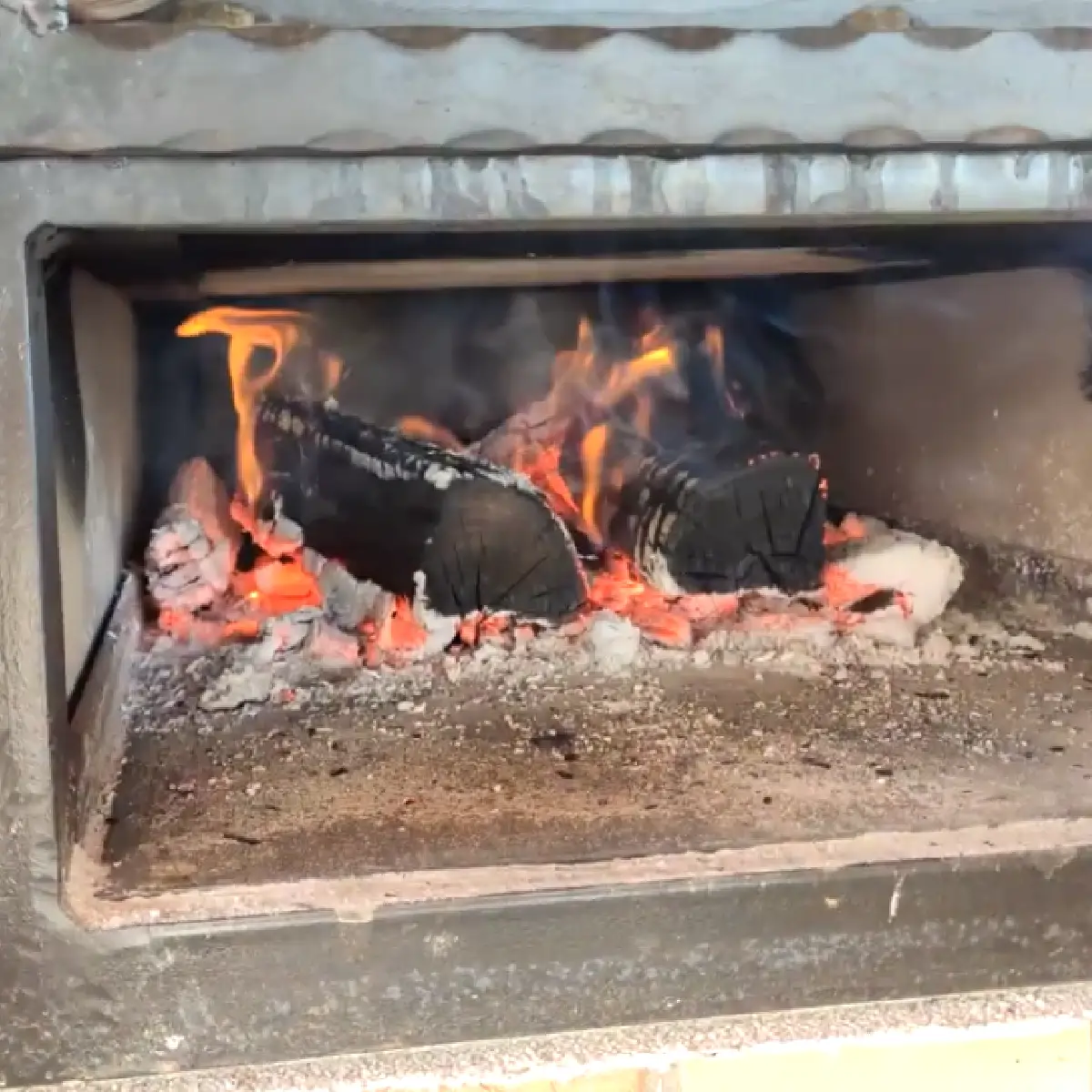
Image description: a heat-storage wood-fired oven needs rhythm, and the key to stability is a well-built ember bed. Image title: Rhythm and Ember Bed in a Heat-Storage Oven. Image description detail: the image illustrates that stable oven behaviour comes from gradual, rhythmic firing and a living ember base.
What wood should you use for firing?
Use only dry hardwood.
- oak
- beech
- acacia
- ash
The wood should ideally be dried for at least 2–3 years and stored in a covered, dry place. Wet wood does the exact opposite of what you need:
- it gives weaker heat
- it creates unstable burning
- it produces unnecessary smoke
Important: avoid liquid fire starters and chemical ignition products. The oven surface can absorb smells, and the food will remember them too.
Can you use charcoal too?
Yes, you can. A good wood-fired oven is not harmed by charcoal itself. It can be useful when you want to hold a more stable, lower heat range, for example during BBQ-style cooking. But the foundation of normal firing should still be dry firewood.
If you want to understand different cooking ranges, continue here: heat zones in a wood-fired oven.
How to fire it up properly – step by step
Do not rush. Firing is not a sprint. It is a rhythm.
- Start with dry kindling and small pieces of wood on the bottom.
- Add thinner split logs across them.
- Build a small, airy stack, not a tightly packed pile.
- As the base starts burning properly, add the next wood gradually.
In many cases, a solid ember layer forms within 25–35 minutes, the temperature can reach around 280–300 °C, and the dome warms through as well.
With a good rhythm, sometimes even around 1 kg of dry wood can be enough to reach pizza temperature – but not if you throw it in all at once.
For the full system logic behind this, we also recommend how a heat-storage wood-fired oven works. And from the pizza side: pizza oven temperature and how to bake better pizza.
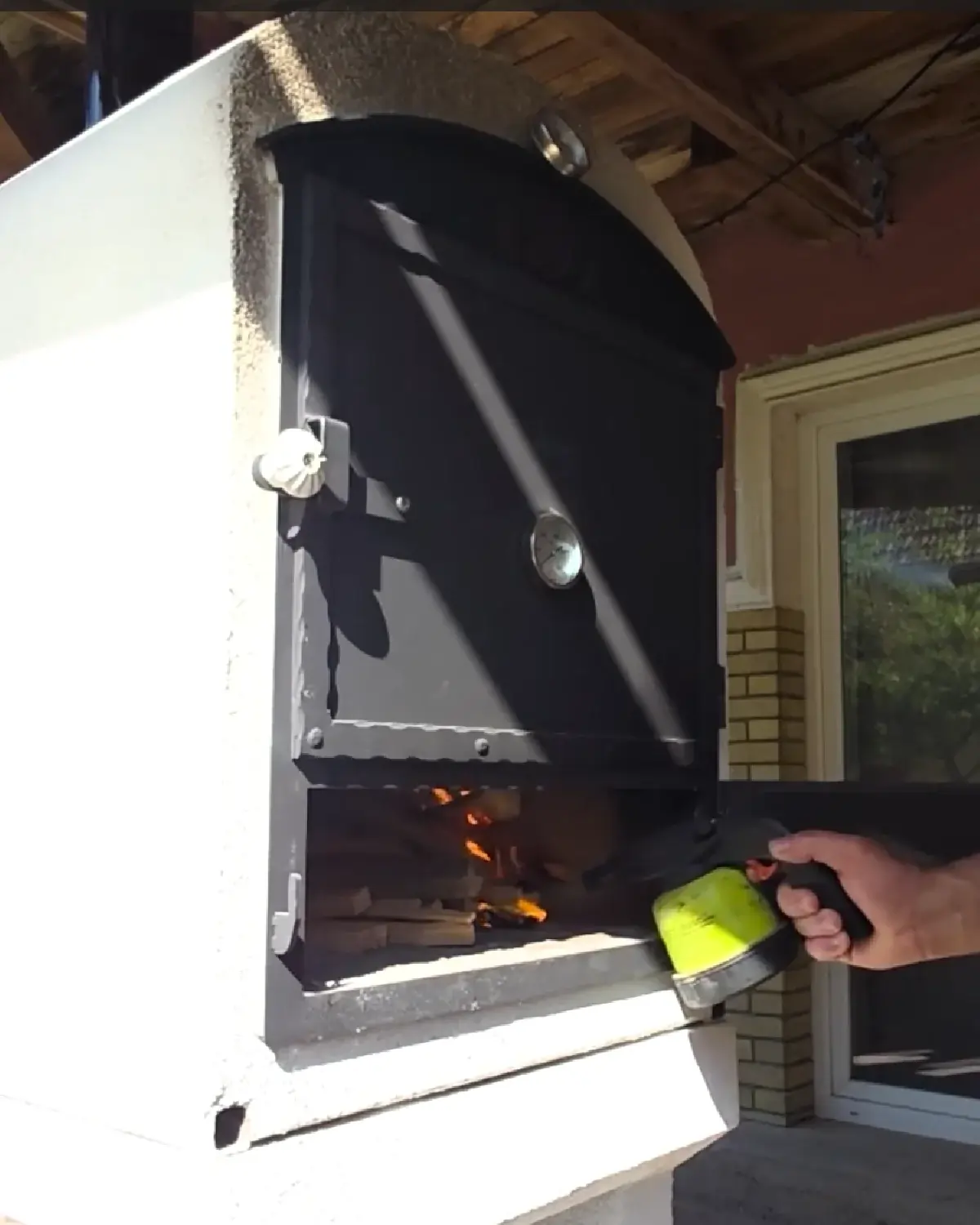
Image description: pizza temperature in a mobile wood-fired oven can be reached in about 30 to 40 minutes with proper firing. Image title: Reaching Pizza Temperature in a Mobile Oven. Image description detail: the image shows how pizza heat develops through gradual, well-timed firing.
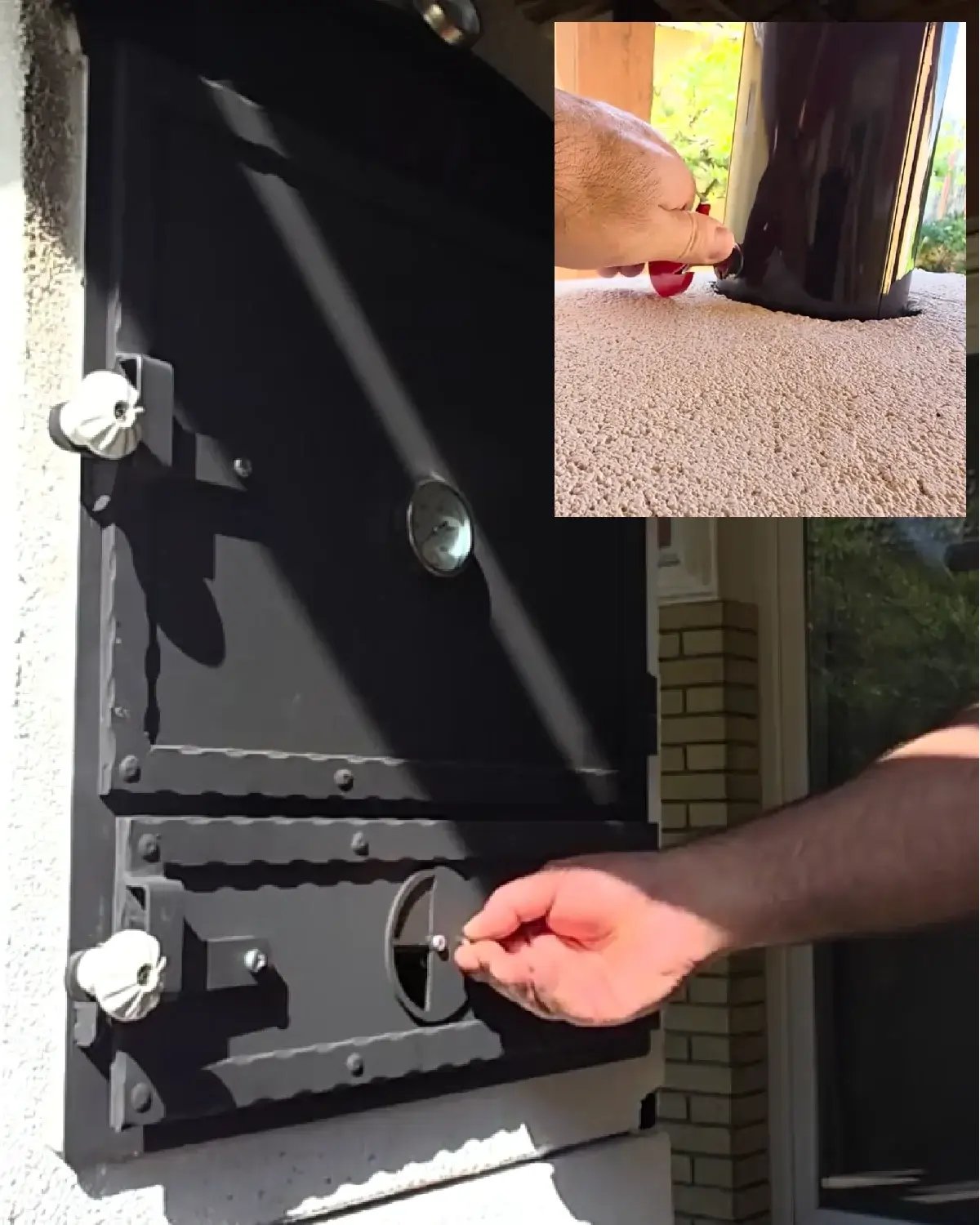
Image description: airflow and flame in a wood-fired oven can be regulated by adjusting the ventilation openings. Image title: Flame and Airflow Regulation in the Oven. Image description detail: the image illustrates how airflow control affects flame intensity and stable heat-up behaviour.
How do you know when the oven is ready?
The thermometer alone is not enough. First, watch the condition of the oven itself. These are good signs:
- the firebrick surface becomes lighter
- the walls look dry and matte
- the ember layer is alive and even
The most common mistake is that the air is already hot, but the baking floor is still cold. Then the pizza can stay raw underneath while the top gets heat too quickly.
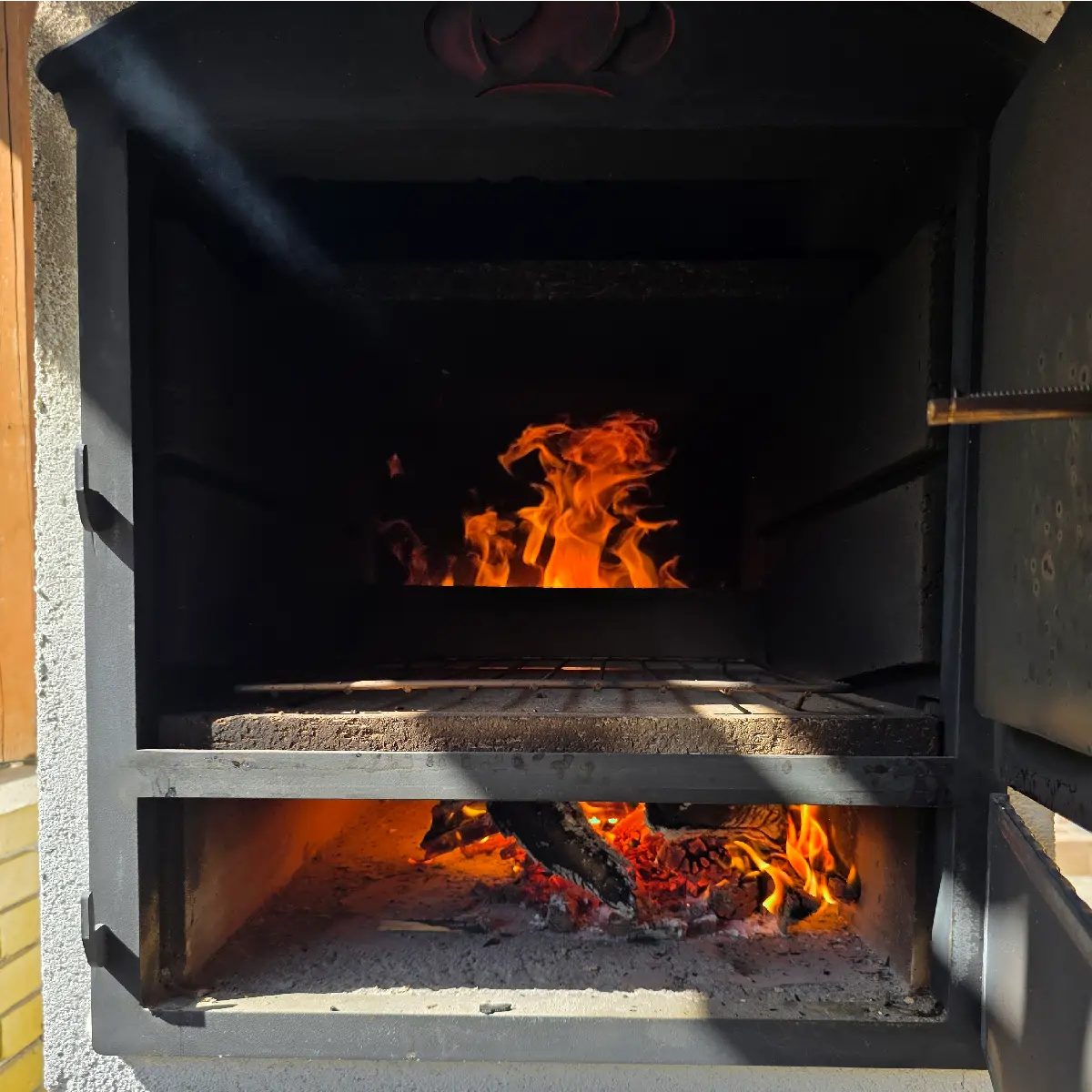
Image description: a living ember bed is the engine of the oven, and when the embers are stable the oven behaves more steadily too. Image title: Stable Ember Bed in the Oven. Image description detail: the image shows the role of a well-built, even ember layer in stable oven heat.
The ember bed is the engine of the oven
Many people think the big flame keeps the heat going. In reality, stability comes from a well-built ember layer. Once you understand that:
- you stop throwing in three large logs at once
- you stop reacting nervously to every small temperature change
- you begin adding wood with rhythm and intention
Firing is not a trick. It is more like a sense of rhythm.
Once you feel that rhythm, the oven stops feeling unpredictable and starts becoming a reliable partner.
The next logical step: Heat Zones in a Wood-Fired Oven – pizza, bread and different cooking ranges
Related guides
- Wood-Fired Oven FAQ
- How a Heat-Storage Wood-Fired Oven Works
- Delivery, Placement and Installation
- Maintenance, Cracks and Winter Use
- What Makes the Tynker Structure Different?
- What Is a Heat-Storage Wood-Fired Oven?
- Pizza Oven Temperature and How to Bake Better Pizza
🔥 Summary recommendation
If you are looking for a mobile wood-fired oven that reacts calmly and predictably, do not look only at the outside. Internal structure, heat storage and everyday usability together create the experience people expect from a truly good oven.